Monetization Systems for 18+ Creators: Why Most Fail + What a “Real System” Looks Like
Most adult creators don’t have a “monetization problem.”
They have a systems problem.
Because monetization isn’t “pick a platform and post more.” That’s just activity. Monetization is what happens after the views: the moment someone decides you’re worth paying, the way you guide them to a clear offer, and the reason they keep paying even when you’re not having a viral week. When those pieces aren’t designed, income feels like a slot machine, one good spike, then silence, then panic posting to force another spike.
This pillar is here to help you build income that feels repeatable, not random.
Not with hacks. Not with fantasy numbers. With structure, the kind that still works when your reach dips, when a platform changes the rules, or when your content doesn’t “hit” for a few days. Because if your income disappears the second your momentum slows down, you don’t have monetization… you have temporary hype.
Here’s what we’re actually building:
An offer ladder so you’re not selling only one thing (and praying it performs).
A clean conversion path so people don’t get confused, hesitate, and disappear.
Retention loops so revenue doesn’t reset to zero every month.
Platform-proof layers so you’re not one algorithm update away from panic.
If Pillar 2 was about identity + consistency, the foundation that makes your brand feel real, Pillar 3 is about what happens after attention: turning that foundation into a business model that can hold weight.
You don’t need more motivation. You need a machine.
Let’s build it.
What a “Monetization System” really is and why most creators stay inconsistent
A monetization system is not a platform.
A platform is just a place where money can happen. A monetization system is the repeatable path that makes money happen on purpose, even when the week is boring, even when views dip, even when you’re not “inspired.” It’s what turns your content from “attention” into something that behaves like a business.
In simple terms, it’s the path that moves someone from:
viewer → follower → buyer → repeat buyer
And if that path isn’t built clearly, your income will always feel like the same cycle:
one good week (because something hits)
one dead week (because nothing hits)
panic posting (trying to force momentum)
random promos (because you need cash now)
back to zero (because nothing is designed to retain)
That’s not a grind problem. That’s not a motivation problem. That’s a leaky machine.
A real system has 5 parts
1) Traffic source (attention)
This is where discovery happens: social platforms, collabs, search, shoutouts, partnerships. The mistake most creators make is believing attention automatically equals money. It doesn’t. Attention is just the top of the funnel, a doorway, not the house.
2) Offer (what you sell)
Not “content.” Not “support me.” An offer is a clear promise: what they get, why it’s worth paying, and why it’s better than staying a free viewer. When the offer is vague, people hesitate. And hesitation is basically a polite no.
3) Conversion path (how they buy)
This is the step people underestimate the most. You can have a great brand and still lose buyers because the path is messy: too many links, too many choices, too much friction. A good conversion path makes buying feel obvious, one clean next step, one main action, zero confusion.
4) Retention loop (why they stay and pay again)
This is the difference between “I made money this week” and “I make money every month.” Retention is built with rhythm (predictability), progression (things evolve), and recurring moments that give people a reason to come back. Without retention, your income resets constantly and you’re forced to live in acquisition mode forever.
5) Stability layer (platform-proofing)
This is your insurance policy. Something you own, email list, customer list, store, community, so your business doesn’t collapse if reach drops or rules change. Platforms can be part of your system, but they should never be the system.
The hard truth
Most creators don’t lose money because they’re “not hot enough” or “not viral enough.”
They lose money because one of these five parts is missing, so the machine leaks. And when the machine leaks, you can post more, work harder, and still feel broke, because effort can’t fix a system that isn’t designed.
In the next sections, we’re going to build each part so your monetization stops being a mood and starts being a model.
Your Offer Ladder: Why “just subscriptions” is a trap
If your monetization is only one offer (ex: “subscribe and that’s it”), your income will always swing.
Because one offer = one failure point. When that offer slows down, everything slows down, not just revenue, but your confidence, your posting behavior, and your decision-making. You start reacting instead of building. And the worst part is you’ll blame yourself (“I’m not consistent enough”), when the real issue is simpler: your business has no second gear.
This is why “just subscriptions” becomes a trap. Subscriptions are a great foundation, but if they’re your only lever, your entire income depends on two things going perfectly every month: constant new sign-ups and constant perceived value.

In a competitive market, that’s fragile and the scale proves how competitive it is. In financial accounts/filings for OnlyFans’ parent (Fenix International), the company reported 377.5M fan accounts and 4.6M creator accounts for the year ending in 2024, which is another way of saying the demand is real, but attention is a battlefield.
So you need more than one way for a fan to pay you, not to “sell harder,” but to build a system that doesn’t collapse when one channel slows down.
The Offer Ladder
Think of it like this:
Easy Yes → Core → More → Premium
This ladder isn’t about spamming offers. It’s about giving different buyer types a clean, natural next step, because not everyone is ready to commit at the same time, or at the same price.
1) Starter offer: Easy yes
This is the “low-friction yes” for curious people who like you but aren’t ready to commit. Without a starter offer, you lose a massive chunk of potential buyers to the “maybe later” bucket and “maybe later” usually means never. The starter offer exists to catch that moment while the emotion is still warm.
2) Core offer : Your stable base
This is your predictable foundation, the offer that makes your monthly income feel less like gambling. It’s not about “getting rich” from it. It’s about creating stability so your business stops living in emergency mode. When your base is stable, everything else becomes easier to build.
3) Expansion offers : Increase revenue per fan
This is where creators stop needing more followers to make more money. Expansion offers are the “more” for your best fans, the people who already like you and are willing to go deeper. Bundles, drops, add-ons, higher tiers… the format matters less than the logic: you’re monetizing demand that already exists instead of constantly hunting new attention.
4) Platform-proof offer : Owned income
This is your insurance policy. Something you own (email list + digital products + optional community) so reach dips don’t instantly become income dips. The point isn’t to leave platforms, the point is to stop being trapped by them. When you own a direct channel to your audience, you can recover faster, relaunch faster, and build momentum without begging an algorithm.
Why this matters: most funnels convert way lower than you think
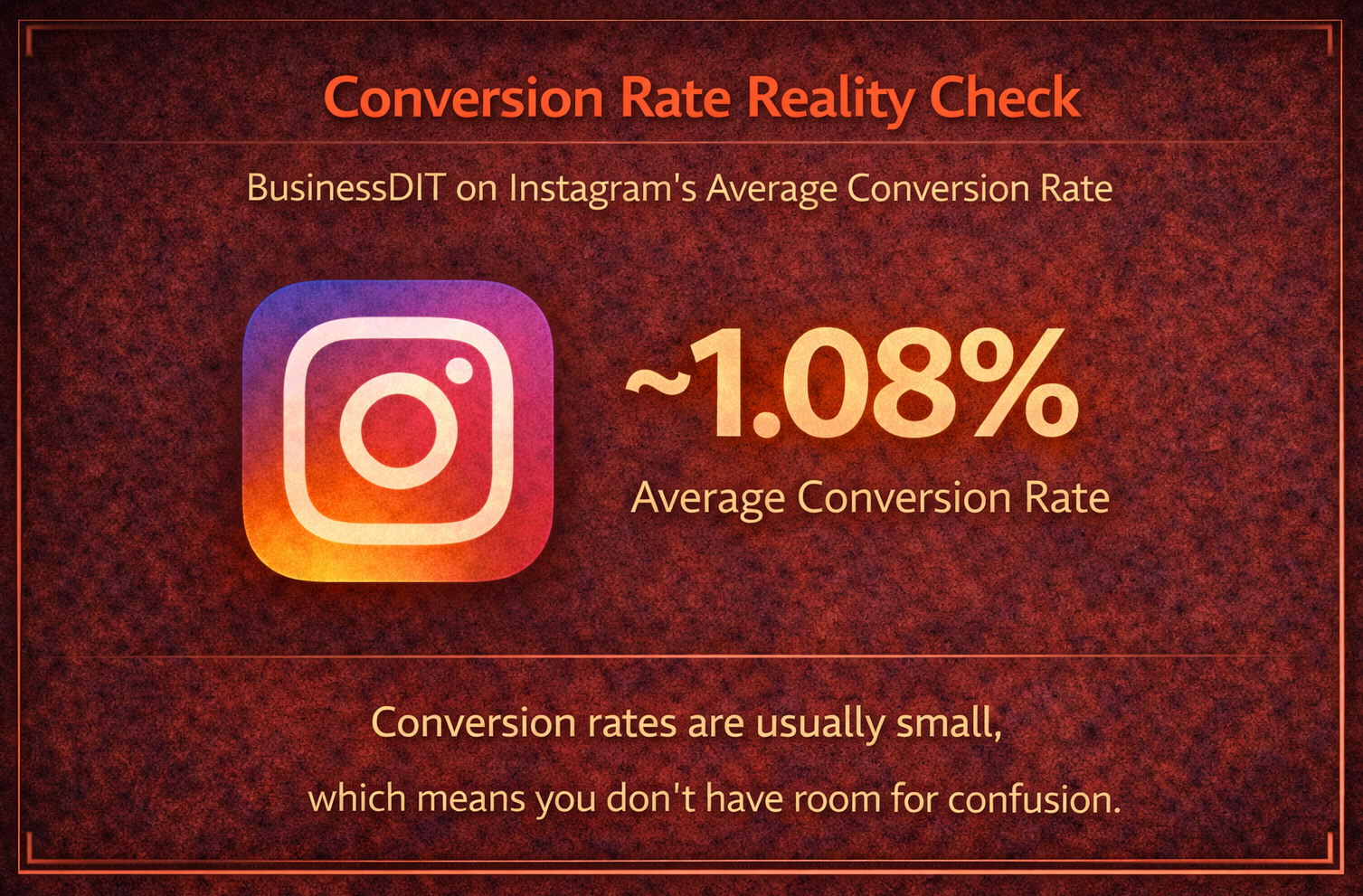
Creators often assume “if they click, they’ll buy.” In reality, conversion rates are usually small, which means you don’t have room for confusion. BusinessDIT report that Instagram’s average conversion rate around ~1.08% (not specifically link-in-bio, but it highlights how thin conversion can be).
So if your page makes people choose between 9 links and 12 unclear offers, you’re not “giving options”… you’re deleting buyers. The offer ladder isn’t there to add complexity, it’s there to remove friction while still giving your audience the right next step at the right time.
One more reality check: churn is normal, plan for it

Even strong subscription businesses lose people monthly. Recurly’s churn benchmarks commonly use ~4% monthly churn as a “good” reference point, and they highlight how quickly churn compounds, for example, 5% monthly churn can mean losing nearly half your customers in a year if you don’t offset it with retention + reacquisition.
So the goal isn’t “no churn.” The goal is designing a system where new conversions + retention loops + expansion offers outpace churn, so you grow instead of resetting to zero every month. And that’s exactly what we build next: the conversion path that turns attention into paid outcomes without confusion.
The Conversion Path: How people actually go from “viewer” to “buyer”
Here’s the part most creators underestimate:
You don’t need a “better audience.” You need a cleaner path.
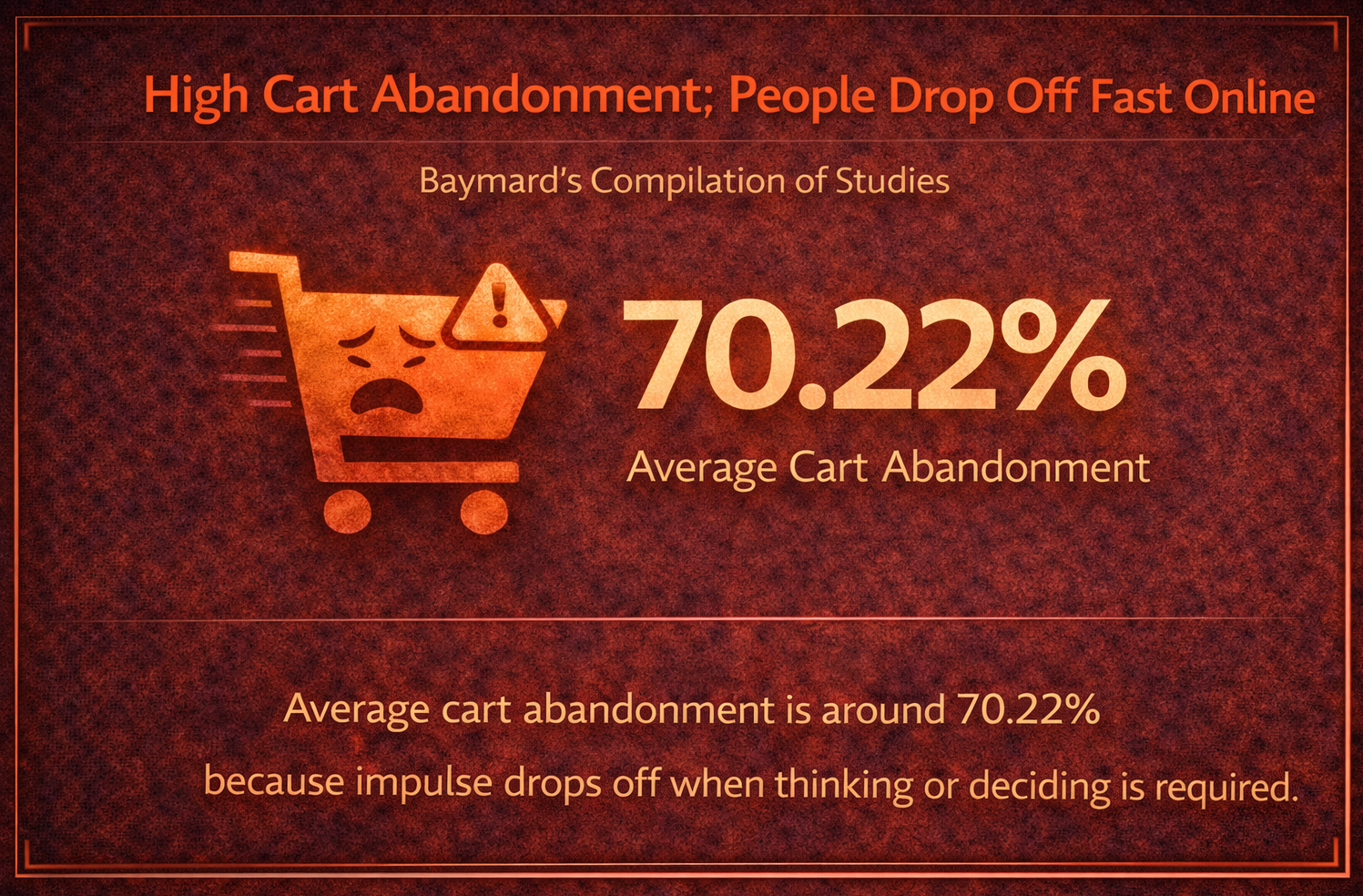
Because online, people drop off fast and not because they “don’t like you.” They drop off because the moment someone has to think, choose, or work, the impulse dies. Baymard’s compilation of studies puts average cart abandonment around 70.22%. That stat is brutal for one reason: it proves that even when someone is already interested enough to add something to a cart, most of them still disappear before the finish line.
So if your buying journey has friction (too many clicks, slow pages, too many options), you’re basically donating your customers to the void. Not because your offer is weak, but because your path is doing what a good path should never do: creating hesitation.
The 1-Path Rule: No menu, no confusion
Your conversion path should feel like one obvious next step: Public content → Profile promise → One primary link → One primary action → Thank you / next step
Not: Public content → link hub → 9 choices → “I’ll come back later”
Because “I’ll come back later” is the polite way people say “no” online. When you give someone a menu, they don’t feel empowered, they feel uncertain. Too many options creates decision fatigue, which is exactly what the “paradox of choice” research shows: the more options people have, the more likely they are to stall and do nothing.
The “Bio Page” should behave like a landing page
Most creators use a bio page like a directory. But your bio page is supposed to convert, not “show everything.”
Why this matters: Unbounce’s benchmark analysis (Q4 2024) found a ~6.6% median landing page conversion rate across industries, based on hundreds of millions of visits and tens of millions of conversion actions. That number isn’t there to flex. It’s a reminder that even well-built pages don’t convert like magic, so you can’t afford a path that’s messy, slow, or unclear.
A conversion path isn’t a gallery. It’s a guided decision.
What your conversion path must answer in 5 seconds
When someone lands, they should instantly understand:
What is this? (the promise)
Who is it for? (the vibe / niche)
What do I get? (clear value)
What do I do next? (one button / one action)
If they have to “explore,” they leave, not because they aren’t interested, but because your page made them do work while they were still in impulse mode.
The friction killers: The stuff that silently nukes sales

A big one: checkout complexity. Baymard’s research has found that 18% of US online shoppers have abandoned an order due to a “too long / complicated checkout process.”
That’s the same pattern in creator funnels:
too many steps
too many decisions
too many fields
too much uncertainty
too much “figure it out”
So your goal is always:
fewer clicks
fewer decisions
fewer steps
faster load
Conversion is not persuasion. It’s removal of friction.
And once the path is clean, the next problem becomes obvious, not “how do I get people to buy once,” but “how do I get them to stay?” That’s where retention loops come in.
Retention Loops: The difference between “income” and “random money”
Most creators obsess over getting new subscribers.
The creators who actually get stable income obsess over keeping them.

Because retention compounds. Bain / Reichheld’s work is the classic proof: a 5% increase in retention can increase profits by 25% to 95%, not because people “like you more,” but because the economics of repeat customers get stronger over time.
First: accept the baseline reality: Churn is normal
Even strong subscription businesses expect people to cancel and like we already said earlier, churn is normal. The real mistake is pretending churn is a “problem you’ll solve later.” If you don’t design for churn from day one, your income will always reset because the business is built like a leaky bucket: you keep pouring new people in, but nothing is built to keep them. That’s why retention loops aren’t a “nice to have”, they’re what turns subscription revenue into something predictable.
So the goal isn’t “zero churn.” The goal is building a system where new joins + upsells + retention loops outpace churn, so your revenue doesn’t reset to zero every month.
The Retention Loop Framework (simple + repeatable)
1) Rhythm loop: Predictability
People stay subscribed when they can predict the experience.
fixed schedule (weekly drops / consistent cadence)
consistent format (series, themed sets, “episodes”)
If your output feels random, churn goes up because fans don’t know what they’re paying for next month.
2) Progression loop: It feels like it’s going somewhere
Retention dies when content feels like the same week on repeat.
Progression can be:
chapters / arcs
evolving themes
“leveling up” production, story, or exclusivity over time
It’s not about posting more. It’s about making the subscriber feel like they’re continuing something.
3) Reward loop: Give them a reason to keep paying
A reason to stay that’s earned over time:
loyalty perks
milestone drops
returning-subscriber bonuses
“members-only” formats that don’t hit public feeds
This creates “I’ll stay subscribed because next month matters.”
4) Relationship loop: Frictionless connection
You don’t need to be everywhere, you need a clean touchpoint you own.

Email is still one of the strongest retention channels in real businesses. Constant Contact’s Small Business Now report says that in 2024, 53% of small business owners (US/UK/Canada/Australia) used email marketing as their most frequent strategy for finding new and retaining repeat customers.
The logic is simple: platforms rent you attention. An owned list lets you bring people back.
The retention killer nobody talks about: “invisible churn”
Sometimes fans don’t churn because they “stopped liking you.”
They churn because the system is messy: unclear schedule, unclear value, no reason to return, too many offers, no progression.
Retention is not a personality trait.
It’s design.
Platform-proofing + Risk Control: How to stop one change from collapsing your income
If you build your whole business on one platform, you don’t have a business. You have a single point of failure.
That’s not paranoia, it’s basic risk management, especially in a space where the money flows are massive and the competition is relentless. In 2024, subscriber spending on OnlyFans reached about $7.2B, which shows how real the demand is and how many creators are fighting for the same attention.
Translation: the demand is real… but so is the noise. And when the noise is that loud, your income can’t depend on one algorithm behaving nicely.
The goal: “Owned” revenue + “Rented” reach
Think in two buckets:
Rented reach: social platforms, algorithm distribution, suggested feeds
Owned assets: anything you control (customer list, email list, store, community, website)
When reach dips, owned assets keep cashflow alive. Not because they magically create buyers, but because they let you re-activate people you already earned attention from, without asking permission from a feed.
Risk Control Model: 5 risks + the fix for each
Risk #1 — Algorithm risk: Reach drops overnight
Fix: build an owned reactivation channel (email list / SMS list / customer list).
You’re not collecting emails for vanity. You’re collecting them so you can bring people back when your reach doesn’t.

This is the boring move that separates “creator” from “operator.” Email ROI is consistently reported as one of the strongest in marketing; Litmus cites an average of $36 returned for every $1 spent.
Risk #2 — Policy / moderation risk: Content restrictions, strikes, bans
Fix: separate your system into:
Brand-safe discovery (public content that won’t get you limited)
Monetization destination (where access is controlled and compliant)
Backup distribution (2nd platform + your owned list)
This way, a policy change doesn’t delete your whole funnel, it only slows one lane. The system still moves.
Risk #3 — Payment risk: Processor issues, chargebacks, payout holds
Fix: don’t rely on a single checkout route.
Maintain at least one alternative payment flow (where allowed)
Keep clean records (customer support, delivery proof, refund policy)
Avoid “unclear offers” that increase disputes
Chargebacks are usually a clarity problem more than a marketing problem. People dispute what they didn’t understand, not what they truly valued.
Risk #4 — Churn risk: Monthly resets
Fix: plan for churn like a subscription operator.
You already know churn is normal, the mistake is treating it like a surprise instead of a built-in cost. If you don’t design for churn, your system becomes a treadmill: you spend all your energy replacing cancellations instead of compounding growth. That’s why the churn fix isn’t “post more,” it’s building weekly acquisition + retention structure + expansion offers so cancellations don’t reset momentum.
So you design your system around:
new conversions every week
retention loops (Section 4)
expansion offers (Section 2)
Because “make money once” is easy. “Keep money coming” is the real game.
Risk #5 — Saturation risk: Too many creators, same offers
Fix: differentiation by packaging + positioning (not “post more”).

The creator economy proves direct-to-fan models scale when the offer is clear: Patreon reported crossing $10B in cumulative creator payments and 25M paid memberships (2025).
Your edge isn’t being everywhere. It’s having a clearer promise and a cleaner system than the creator who looks the same, says the same things, and sells the same one offer.
The Platform-Proofing Stack
Primary monetization destination (your main paid platform)
One clean funnel (Section 3: 1-path rule)
Owned list (email/SMS/customer list)
Backup distribution channel (a second reach source)
Off-platform offer (digital product / community / store)
That’s it. Simple. Boring. Effective.
Stop overthinking and start printing results
If your income feels inconsistent, it’s rarely because you “need more followers.”
It’s usually because you’re missing structure.
A real monetization system is simple (but not easy):
offer ladder + clean conversion path + retention loops + platform-proofing.
When those four pieces are built, you stop relying on luck, viral moments, or random spikes.
And here’s the part most people skip: stability is designed.
You design how people buy. You design why they stay. You design how the business survives reach drops, policy changes, and competition.
So don’t chase hype. Build the machine.
Next steps
If you need the definitions, vocabulary, and a clear understanding of what AI modeling actually is, go to AI Modeling 101: What It Is, How It Works, and What Consistency Really Means. It’s the baseline page that makes the rest of the pillars easier to execute because you’re using the same “rules” and terminology.
If your main problem is getting reach without getting capped, go to The Adult Creator Economy on Social Media: How the Industry Works + Platform Realities. That pillar explains why distribution breaks, what platforms reward, and how adult-adjacent accounts get limited, so your monetization system doesn’t get starved at the top of the funnel.
If you’re stuck on production and want a repeatable content engine so your income doesn’t depend on motivation, go to The Faceless Creator Workflow. That pillar is about building a studio-like system so output stays consistent without burning you out.
If you’re unsure what look / identity will actually convert into paid fans, go to AI Girl Niches & Growth: Choosing a Look That Converts Without Burning Out. It helps you pick a lane that’s memorable, scalable, and aligned with demand.
If you want to avoid the mistakes that kill projects once they start working (account risk, rights issues, content flags), go to AI Content Safety & Compliance. That pillar exists to protect the brand long-term, not just help you post.
If you want the fastest execution path, grab the eBook + AI Girl Packs (offer ladders, funnel templates, retention structures, and ready-to-use assets so you can build the system without guessing).
FAQ — Monetization Systems for Adult Creators
1) What’s the difference between “monetizing” and having a monetization system?
Monetizing is making money sometimes. A monetization system is making money predictably because the path is designed: attention → trust → purchase → repeat purchase. Most creators only focus on posting (attention) and skip the parts that actually create stability (conversion + retention). That’s why income feels like spikes instead of a curve. If you can’t point to your offer ladder, your conversion path, and your retention loop on paper, you don’t have a system yet.
2) Why does my income feel random even when my views are high?
Views are not revenue, they’re potential. People still need a clear next step, a clear reason to pay, and a low-friction way to do it. Online, drop-off is normal: cart abandonment averages around 70% across studies compiled by Baymard, which shows how sensitive buying behavior is to friction.
So if your path is messy (too many links, unclear offers, slow pages), you’re basically leaking buyers even when attention is strong. Monetization fixes leaks, not views.
3) What’s the #1 thing that increases conversions the fastest?
Reducing decisions. Most creators accidentally build a “menu” (link hub with options) instead of a conversion path. Choice overload is real: the “paradox of choice” effect is well documented, more options can lower action because people hesitate and bounce.
The fastest win is a single primary action: one destination, one starter offer, one clear promise. Conversion is often less about persuasion and more about removing friction.
4) How many offers should I have without confusing people?
You don’t need 15 offers, you need a ladder with 4 levels. A clean structure is: starter offer (easy yes), core offer (recurring base), expansion offers (bundles/drops/tier upgrades), and one platform-proof offer (owned product/list). This keeps your system simple while still giving fans multiple ways to pay you. It also protects you from relying on a single revenue source that can slow down. When the ladder is clear, more offers can increase revenue without increasing confusion.
5) Should I focus on subscriptions or one-time offers first?
Start with what you can deliver consistently without stress. Subscriptions create stability, but they also demand retention structure (rhythm + progression). One-time bundles or drops can be easier early because you’re not promising ongoing delivery yet. The best systems combine both: a subscription base for predictability and one-time expansion offers to increase revenue per fan. Think of subscriptions as your “rent,” and expansion offers as your “growth.”
6) What actually makes fans stay subscribed instead of canceling?
Retention is mostly design, not motivation. People stay when they can predict what they’re paying for (rhythm), feel like the experience evolves (progression), and have a reason to return (recurring formats/drops). In subscription businesses, churn is expected, which is why retention matters so much; Recurly’s benchmark research is built around churn-rate norms and emphasizes how small improvements compound over time.
If your content feels random or repetitive, fans cancel even if they still “like” you. A retention loop makes the subscription feel like a continuing experience, not a monthly impulse.
7) Why do people click my link but don’t buy?
Because clicking is curiosity, buying is commitment. If the landing experience creates friction (too many steps, too much reading, unclear offer, confusing pricing), people bounce. Checkout and buying friction is one of the biggest silent killers; many breakdowns cite “too long/complicated” checkout as a major abandonment driver.
The fix isn’t more posting, it’s a cleaner path: one main offer, one main button, fast page, clear promise. Treat your bio/destination like a landing page, not a directory.
8) How do I “platform-proof” my income in a realistic way?
Platform-proofing means building at least one channel you control so you can recover instantly when reach drops. The simplest is an email list or customer list, because it’s direct communication you own. Email marketing is consistently reported as a high-ROI channel; Forbes’ coverage of email marketing stats commonly cites around $36 returned per $1 spent (industry aggregate).
You don’t need a complex setup: one lead magnet, one list, and a basic follow-up flow is enough to remove the “single platform” risk. The goal is stability, not complexity.
9) Is it better to send people to a link hub or one page?
One page usually wins because it removes decisions. Link hubs are fine only if they still guide people to one primary action (everything else secondary). If you have multiple equal options, you create hesitation, and hesitation becomes “I’ll do it later,” which becomes never. You want the path to feel obvious: “This is what you do next.” Simplicity is a conversion strategy, not a design preference.
10) What’s a realistic weekly monetization routine that doesn’t burn me out?
Run your business like a light “studio schedule,” not a constant hustle. You want one weekly rhythm: a planned content cadence (attention), one consistent conversion push (starter offer), and one retention action (progression or drop). This structure keeps output predictable, which improves retention without requiring you to be online 24/7. The point is to stop relying on motivation and start relying on a system. A system is what scales, not mood.
