The Faceless Creator Workflow: A Repeatable System to Build, Create, Post, and Scale
The Real Problem Isn’t Motivation, It’s Throughput
Most faceless creators don’t fail because they “ran out of ideas.”
They fail because they can’t ship consistently without the quality falling apart… or the burnout creeping in.
And that’s the trap: when your output slows down, you start blaming your discipline, your mood, your “drive.” But consistency in this space isn’t a personality trait. It’s not motivation. It’s not even talent.
It’s throughput.
Throughput is the unsexy part of the game: how fast you can turn an idea into a finished piece, how reliably you can repeat that process, and how well you can do it without needing perfect conditions. If you don’t have throughput, everything else collapses: growth becomes random, monetization becomes unstable, and you end up in a cycle of “big push → exhaustion → silence → restart.”
That’s why this pillar exists.
Not to give you a list of “post 3 times a day” tactics. Not to dump some overwhelming checklist. This is about building a faceless studio workflow, a simple production system that makes content feel high quality by default, because the process is built for it.
By the end of this pillar, you’ll understand:
why most creators get stuck in “planning mode” and never ship,
why “just be consistent” is useless advice without a pipeline,
and what the best faceless creators do differently: they don’t create like artists… they operate like studios.
Once the workflow is in place, content stops feeling like a daily decision. It becomes a machine you can run on a schedule.
Let’s build the system.
The Bottleneck Triangle: Consistency vs Quality vs Speed
Here’s the problem nobody wants to admit:
Most creators aren’t inconsistent because they’re lazy. They’re inconsistent because they’re trying to do the impossible, they’re trying to max out quality, speed, and consistency at the same time… without a system.
That’s the Bottleneck Triangle:
Quality (it looks premium, feels intentional, converts)
Speed (you can produce without it taking over your life)
Consistency (you can repeat it week after week)
When you don’t have a workflow, you can usually only pick two, and most people don’t even get that. They get stuck in one of these failure modes:
Mode 1: “High quality, slow output”
You over-edit, over-tweak, and re-do everything until it’s “perfect.”
The content might be good, but the posting schedule dies. And once you disappear for a week, momentum resets, confidence drops, and you start overthinking even more.
Mode 2: “Fast output, weak quality”
You post a lot, but everything feels generic.
It doesn’t build identity, it doesn’t build trust, and it doesn’t convert. You get views, but the audience doesn’t attach. That’s when people say “my niche is dead” when the real issue is packaging.
Mode 3: “Random bursts”
This is the most common one: a few intense days of output, then silence.
Not because you don’t want it, because your process isn’t sustainable. You’re relying on motivation and adrenaline instead of a repeatable pipeline.
The hard truth: “Just be consistent” is fake advice
Consistency is the result of a system that makes creation easy to repeat. If the process is heavy, you’ll avoid it. If the process is unclear, you’ll procrastinate. If the process requires perfection, you’ll burn out.
So the goal of the Faceless Creator Workflow is not to “make you work harder.”
It’s to move quality out of your mood and into your method.
Instead of asking: “Do I feel like creating today?”
You start asking: “Which stage of the pipeline am I running today?”
And that’s how you escape the triangle. You stop trying to do everything at once, and you build a workflow where:
quality is protected by standards,
speed is protected by batching,
consistency is protected by structure.
When people tell you “just be consistent,” they ignore the hidden killer: role-switching. If you’re planning, creating, judging, editing, and posting all in the same session, you’re basically forcing your brain to context-switch nonstop, and that has a real cost.

In one controlled study on interruptions at work, Mark et al. set interruption frequency at every 2 minutes, and even though people compensated by working faster, the interrupted conditions came with higher stress, higher frustration, more time pressure, and more effort.
That’s the same pattern creators feel when they mix roles: you can “push through,” but it taxes you and that tax shows up later as burnout, avoidance, or inconsistent output.
Studio workflows solve this by separating roles on purpose. You don’t “create + judge + distribute” at the same time. You run one mode at a time, so the system stays sustainable.
Faceless Studio (roles + pipeline): How the best creators scale without chaos
Here’s what separates creators who “post when they can” from creators who can scale output without falling apart:
They don’t rely on willpower. They rely on role separation.
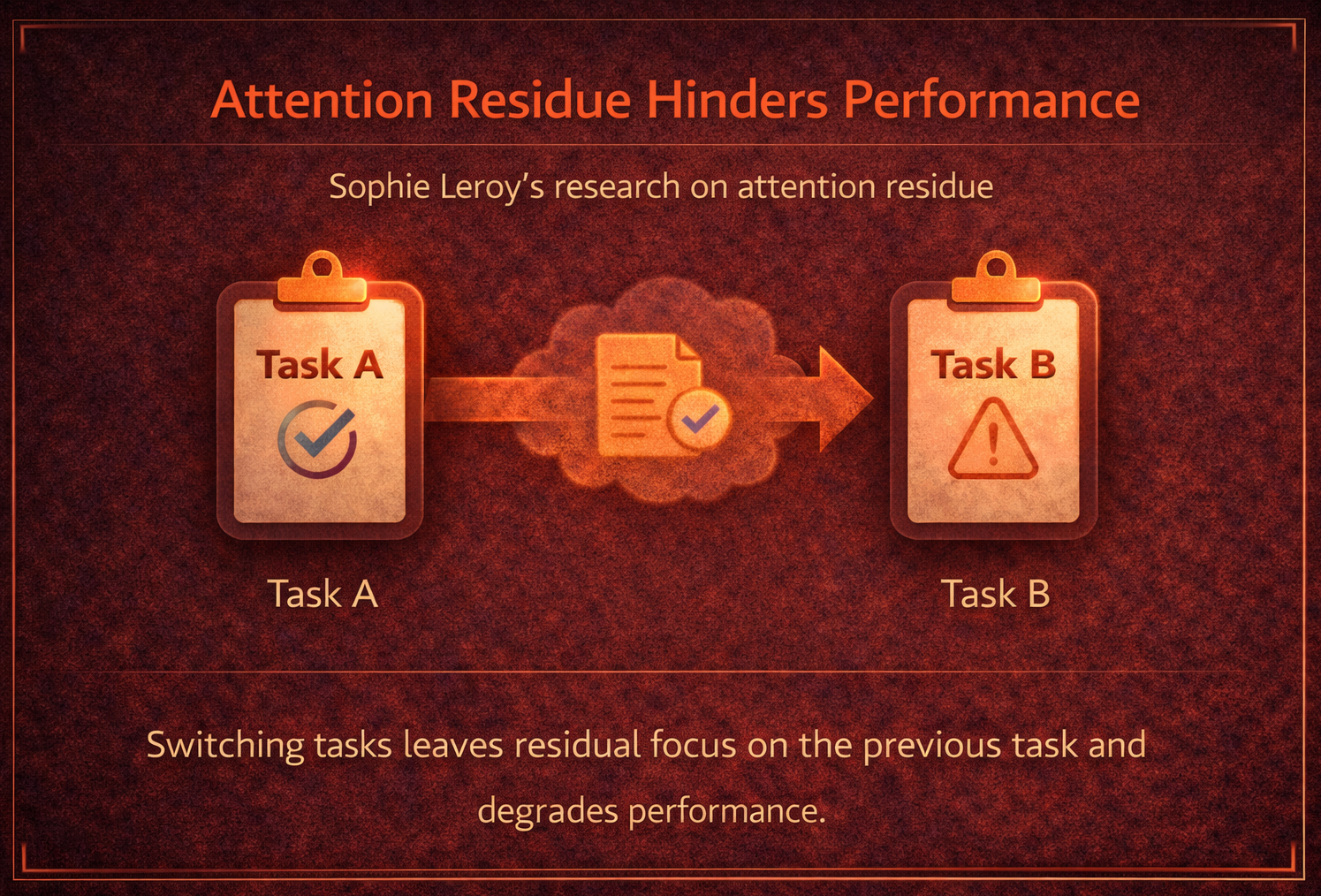
The reason this matters isn’t just productivity, it’s cognitive. Sophie Leroy’s research on attention residue shows that when you switch from Task A to Task B, part of your attention can stay stuck on Task A, which hurts performance on the next task. In other words: even when you think you’ve moved on, your brain is still carrying leftover mental weight.
That’s exactly what happens when a creator tries to plan, create, judge, edit, and distribute all at once. You’re not “multi-talented.” You’re mentally fragmented. And the result is predictable: slower sessions, inconsistent quality, more resistance to starting, and that end-of-day feeling of “I worked all day but shipped nothing.”
So the Faceless Studio model solves one core problem: it reduces attention residue by making you operate in one mode at a time.
The 4 studio roles: You can be all of them, just not at the same time
1) Producer (clarity + planning)
The Producer decides what gets made and why. Themes, series, cadence, priorities. This role makes content feel intentional instead of random. Without it, you might post a lot, but nothing compounds because the output doesn’t connect.
2) Creator (assets + volume)
The Creator generates raw material: visuals, variants, hooks, scenes. This is where you build volume without pressure to “get it perfect.” A studio doesn’t ask the Creator to judge, it asks the Creator to produce.
3) Editor (quality + packaging)
The Editor protects quality through standards. This role turns “good enough” into “premium,” but without spiraling into perfectionism. Editors shape what’s there; they don’t restart the whole thing.
4) Distributor (shipping + signals)
The Distributor ships and learns. Posting isn’t the finish line, feedback is. This role watches what actually moves people (clicks, saves, conversions, retention signals) and feeds it back into the next cycle.
When you separate roles, you don’t just work faster, you work cleaner. Less mental drag. Less second-guessing. More shipped output.
The pipeline: What turns chaos into repeatable output
Once roles are clear, the studio runs one pipeline:
Ideation → Production → Packaging → Distribution → Feedback
This is the part most creators miss: consistency isn’t “try harder.” It’s having a process that can run even when the vibe is off.
Next section, we’ll walk through the pipeline stages (high-level) and show how they fit together, so output becomes predictable without you living on adrenaline.
The Pipeline: The 5 stages that keep output moving
Most creators don’t struggle because they “don’t know what to post.”
They struggle because every post starts from zero.
New idea. New format. New caption. New editing decisions. New doubt. New delay.
That’s why content feels exhausting, not because creating is hard, but because the process has no rails.
A studio fixes this with a pipeline.
Not a complicated SOP. Not a 40-step checklist.
Just a repeatable flow that keeps output moving even when you’re not “in the mood.”
Here’s the Faceless Studio pipeline:
Ideation → Production → Packaging → Distribution → Feedback
The power isn’t in any single step. The power is that content always has a “next stage,” which means you stop stalling in your head.
Stage 1 — Ideation (angles, not inspiration)
The goal of ideation isn’t to “get more ideas.” It’s to create repeatable angles that fit your identity.
Most creators chase inspiration. Studios collect angles.
Because inspiration is random, but angles are reusable. Once you have an angle that works, you can run variations without feeling like you’re repeating yourself, you’re deepening the same theme. That’s how faceless creators build “recognizable” content without showing a face: the recognition comes from format + angle + consistency, not personality.
The real advantage isn’t having 100 ideas. It’s having 10 angles you can run forever.
Stage 2 — Production (batch assets, don’t build one post at a time)
Production is where studios win time.
Instead of building one piece start-to-finish, you generate raw assets in batches: multiple visuals, multiple hooks, multiple variants. When you batch, your brain stays in one mode (Creator role), so output becomes smoother and faster, without forcing you to lower standards.
This is also where you quietly protect quality: when you have volume, you can select the best pieces instead of forcing one idea to work.
Most creators think batching is about speed. It’s actually about control.
Stage 3 — Packaging (make it feel intentional)
Packaging is what makes content convert.
This stage isn’t “add more.” It’s “make it clear.” It’s where your brand becomes recognizable: the tone, the style, the structure, the hook patterns, the visual consistency. Packaging is why some accounts feel premium even when they’re simple, and why other accounts feel cheap even when they post a lot.
If production creates assets, packaging creates identity.
And identity is what turns “viewers” into “followers,” and “followers” into “buyers.”
Stage 4 — Distribution (cadence beats motivation)
Distribution is not “post when you feel like it.”
Distribution is a cadence.
A studio doesn’t ask “do we feel like shipping today?”
It ships because shipping is the job.
This is where most creators secretly break: they treat distribution like an emotional decision, so output becomes inconsistent, and momentum dies. But when cadence is stable, growth becomes measurable, because you’re feeding the algorithm and your audience on a schedule instead of random bursts.
Consistency isn’t a grind. It’s a calendar.
Stage 5 — Feedback (signals → decisions)
Feedback is how the system gets smarter instead of louder.
This stage is simple: you look at signals, spot patterns, and adjust the next batch. Not “obsess over analytics,” but learn what’s working so you stop guessing.
Studios don’t take content personally.
They treat it like a product.
And that mindset is what makes improvement predictable.
Why the pipeline works
It removes the daily pressure of “creating from scratch” and replaces it with movement. Something is always in progress. Something is always ready to ship. Something is always being improved.
Next section, we’ll talk about quality control without perfectionism, how studios keep content feeling premium without spending hours tweaking every piece.
Quality Control Without Perfectionism: How to stay “premium” without slowing to death
Here’s the quiet reason most faceless creators burn out:
They try to protect quality with more effort instead of better control.
So every piece becomes a mini identity crisis. You tweak, re-tweak, second-guess the hook, rewrite the caption, adjust the visual, change the format… and suddenly “one post” costs an entire evening. That’s not quality control, that’s perfectionism wearing a quality mask.
And perfectionism doesn’t create consistency. It creates delay.

A daily-diary study (7 days, 14 check-ins) with N = 317 undergrads found that perfectionistic concerns (the self-critical, fear-of-mistakes side of perfectionism) had a moderate positive association with procrastination, basically, the more “I can’t mess this up” energy, the more delay shows up.
That’s the creator version of “I worked all day but shipped nothing.”
The studio fix: standards + gates, not endless tweaking
Studios don’t rely on taste in the moment. They rely on a minimum quality standard and a couple of simple “gates” that content must pass before it ships.
Not because studios don’t care about quality.
Because they care about output and quality, and the only way to get both is to turn quality into a system.
If you want a clean mental model: quality control is like a checklist.
You’re not doing surgery, obviously, but the principle is the same: a simple standard beats heroic effort.
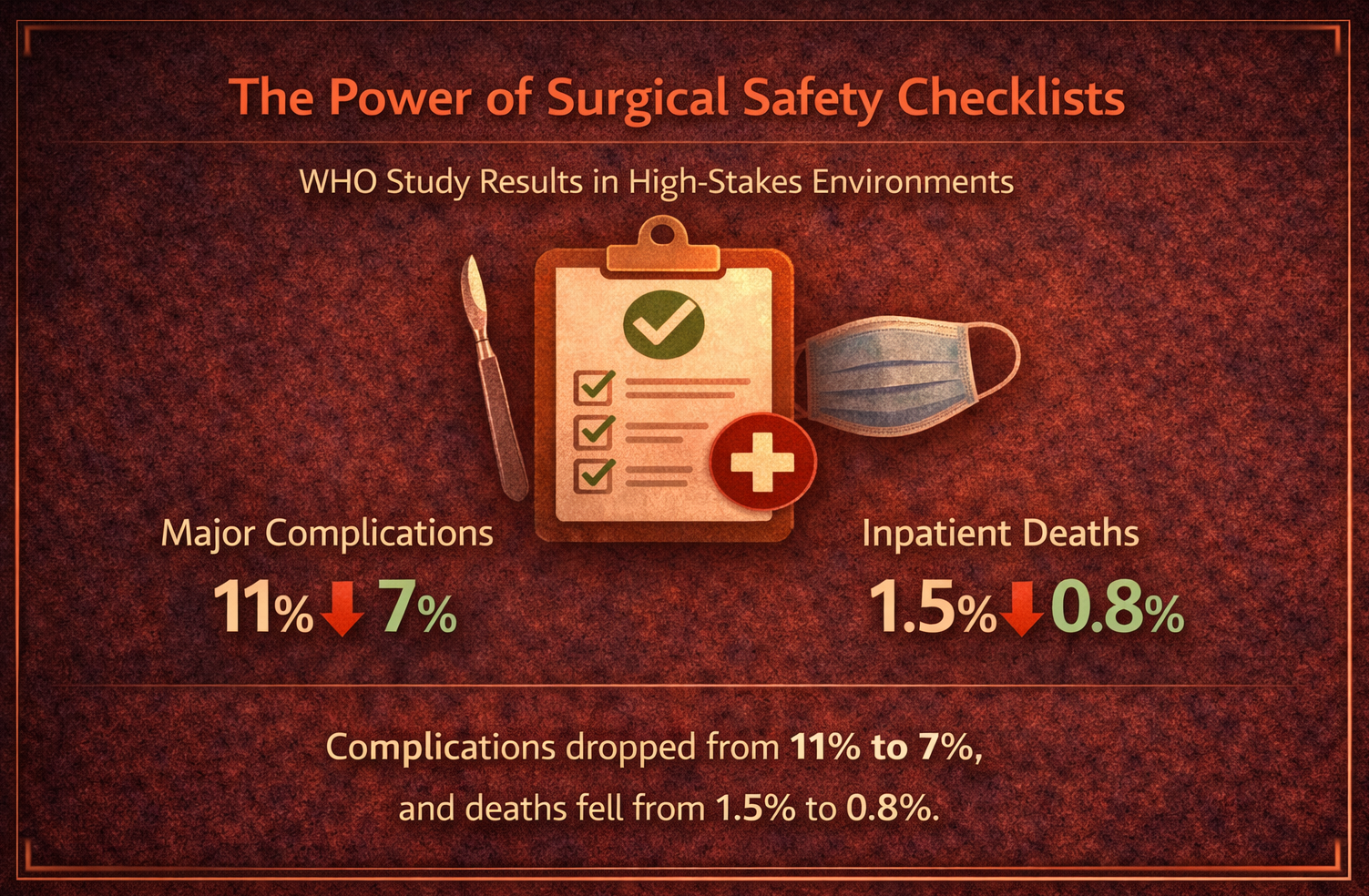
In high-stakes environments, checklists don’t exist to make work slower, they exist to make results more consistent. For example, WHO reported that introducing a surgical safety checklist was associated with major complications dropping from 11% to 7%, and inpatient deaths from 1.5% to 0.8% across study sites.
The Two-Pass Rule: How to keep quality high without getting stuck
Instead of “make it perfect,” studios run two passes:
Pass 1: Create fast (get a real version on the table)
Pass 2: Refine once (apply your standard, then ship)
This is how you stay premium without turning every post into a forever project. Your brain stops looking for “perfect.” It looks for “meets standard.”
The real goal of QC
The goal isn’t to make every piece your best piece.
It’s to make your worst piece still feel on-brand, still feel intentional, and still be good enough to build trust.
Because in faceless content, consistency is quality. And quality that never ships is just anxiety with nice typography.
Next, we’ll build the consistency engine that makes this sustainable: cadence + batching + constraints, so your workflow stays high-output without burning you out.
The Consistency Engine: How to stay high-output without burning out
Most creators think consistency is a mindset problem.
It’s not.
It’s a work design problem.
Because if your workflow requires you to be “on” every day, creative, sharp, motivated, inspired, you didn’t build a system. You built a pressure loop. And pressure loops don’t scale… they break.

That’s why burnout is so common in creator work. In Awin’s creator burnout research, 78% of influencers said they’d suffered burnout (and constant platform changes were a major anxiety driver). Other creator mental-health reporting based on surveys of hundreds of creators shows the same pattern: burnout isn’t rare, it’s a baseline risk of the job if the workflow has no boundaries.
So the goal of a “consistency engine” isn’t to make you post more.
It’s to make output repeatable.
The rule: Consistency is built from constraints, not motivation
Studios don’t rely on vibes. They rely on constraints that protect energy:
a realistic cadence (a rhythm you can survive)
batching (so you don’t restart from zero every day)
standards (so quality is predictable)
recovery (so the system doesn’t eat you)
When those constraints exist, consistency stops feeling like discipline… and starts feeling like a schedule.
Cadence beats intensity
Most creators don’t quit because the work is hard.
They quit because the work becomes endless.
A consistency engine solves that by replacing “all-in bursts” with boring, repeatable shipping. The content doesn’t need to be perfect. It needs to be shipped on a rhythm your audience can predict and your body can sustain.
Batching is not a hack, it’s protection
Batching isn’t about being a productivity bro. It’s about removing daily decision fatigue.
When you batch, you reduce how often you have to “boot up” your creator brain. You stop paying the startup cost every single day. And that’s how you keep quality high without living inside content production 24/7.
The real output secret: build a system that works on low energy days
A good workflow doesn’t only work when you’re feeling unstoppable.
It works when:
you’re tired
you’re busy
you’re not inspired
you’re not in the mood
That’s the test.
Because if your system only works on “perfect days,” it’s not a system, it’s a gamble.
Next, we’ll talk about the asset library: how faceless creators stop starting from scratch and build reusable building blocks that make output feel easy.
The Asset Library: Why the best faceless creators don’t start from scratch
Here’s the truth that makes faceless creation scalable:
The best creators don’t “create more.”
They reuse better.
Most people think reuse is lazy. In reality, reuse is what creates consistency, speed, and a recognizable brand, especially when you’re faceless. Because if you start from scratch every time, you’re not building a content engine… you’re building a daily stress ritual.
This is where the Asset Library comes in.
An asset library is the collection of building blocks that lets you produce content without reinventing the wheel: your formats, hooks, templates, visual rules, caption structures, CTAs, story arcs, even the way you open and close a post. It’s what makes content feel “on-brand” even when you batch it quickly.
And there’s a psychological reason it works: decision fatigue is real. Studies on choice overload show that too many options can reduce action, the same pattern applies to creators. If every post forces you to decide everything from scratch, you slow down, second-guess, and burn time on decisions that shouldn’t even be decisions anymore.
What goes inside an Asset Library (high-level, not the templates)
You don’t need a massive library. You need a useful one.
1) Hook bank
Not random lines, repeatable opening patterns that match your niche and tone.
2) Format bank
Your recurring “shows”: series formats, post structures, pacing patterns. Recognition is built through repetition, not novelty.
3) Visual system
Brand rules: color/contrast vibe, typography style, framing, composition rules. Faceless creators win when their visuals feel identifiable without a face.
4) Caption frameworks
A few proven structures that you can rotate. The point isn’t to copy-paste, it’s to remove “blank page” friction.
5) CTA library
Clear next steps matched to the post type (follow, save, click, subscribe). A CTA isn’t just a line, it’s part of your conversion path.
6) Variation templates
The ability to take one idea and produce multiple angles without repeating yourself. This is where volume becomes easy.
The payoff: content becomes faster and more consistent
The Asset Library does something creators don’t expect: it protects quality.
Because quality isn’t only “how good this one post is.” Quality is how consistent your brand feels over time. When your library is strong, your “average” output rises, and you stop having those messy weeks where everything feels off-brand.
Plug-and-play assets
This is also where plug-and-play assets matter. Building an asset library from scratch is possible, but it’s slow and most people never finish it because they keep changing direction.
That’s why the AI Girl Packs aren’t “content ideas.” They’re pre-built libraries: formats, hooks, packaging patterns, and brand structure so you can start producing like a studio immediately, without spending weeks inventing the system.
The Metrics That Actually Matter
Most creators track the wrong things.
They track what feels good: views, likes, follower bumps.
But those metrics don’t tell you if your system is working, they only tell you if a post got attention.
A studio tracks metrics that answer three questions:
Is the pipeline producing enough output?
Is the content getting the right kind of response?
Is the system improving over time (without burning you out)?
Because if you don’t track the right signals, you end up doing more work for the same results and that’s how people burn out while telling themselves they’re “grinding.”
Metric bucket #1: Throughput - Are you actually shipping?
This is the operator side of content.
How many pieces shipped this week?
How many pieces are ready in draft?
How many assets are in production?
How many days did you lose to “starting from scratch”?
Throughput metrics aren’t sexy, but they’re the foundation. If throughput collapses, everything else collapses right after.
Metric bucket #2: Quality signals - Are people telling you it’s landing?
Forget the like count. Look for behaviors that indicate real value:
Saves (people want it again)
Shares (people think it’s worth spreading)
Profile clicks (curiosity turned into intent)
Watch time / completion (the content held attention)
These signals are basically your audience telling you: “this is good enough to keep.” That’s the real definition of quality in faceless content.
Metric bucket #3: Conversion signals - Is the content creating outcomes?
This is where faceless creators level up, because money comes from conversion, not applause.
link clicks / destination clicks
conversion rate at the destination (subscribe, buy, opt-in)
DM intent (people asking “how do I get this?”)
offer performance by format (which post types actually produce buyers)
You don’t need complex dashboards. You need to know which formats create paid outcomes so your studio produces more of what works.
Metric bucket #4: Sustainability - Will you still be doing this in 90 days?
This is the metric most people ignore and it’s the one that decides who wins.
energy cost per post (does this drain you or feel repeatable?)
time per piece (are you speeding up over time?)
stress level / avoidance (are you procrastinating because the process is heavy?)
consistency streak (are you shipping weekly?)
If your workflow “works” but you hate your life, it’s not a system. It’s a countdown.
The weekly review - The only loop that really matters
A studio doesn’t obsess daily. It reviews weekly.
Because the goal isn’t to become an analytics addict.
The goal is to run a loop: ship → measure → adjust → ship again.
That’s how your workflow gets sharper without you working harder.
Conclusion: Why Faceless Creators “Fail” and why it’s almost never talent
At this point, the pattern should be obvious:
Most faceless creators don’t fail because they lack ideas.
They fail because the workflow breaks and when the workflow breaks, everything else becomes emotional.
So here’s the recap, framed the right way: the biggest “failure modes” aren’t mistakes. They’re signals that your studio system is missing one key piece.
Failure Mode #1 — “I’m inconsistent”
Usually means: you’re relying on motivation instead of throughput.
You don’t need more willpower, you need a workflow that can run on normal days, not perfect days.
Failure Mode #2 — “I overthink everything”
Usually means: your quality control is perfectionism, not standards.
When there’s no pass/fail rule, everything stays “almost ready,” and output slows to a crawl.
Failure Mode #3 — “I start strong, then disappear”
Usually means: your cadence is too aggressive and your system has no batching protection.
Intensity creates bursts. Systems create repeatability.
Failure Mode #4 — “I’m busy all day but ship nothing”
Usually means: you’re mixing roles and carrying mental residue from task to task.
Studios separate Producer, Creator, Editor, and Distributor so focus stays clean and output actually moves.
Failure Mode #5 — “My content is consistent but it doesn’t feel premium”
Usually means: you’re producing, but you’re not packaging.
Your pipeline exists, but the standards and brand rules aren’t strong enough to make the output feel intentional.
Failure Mode #6 — “I post a lot but growth feels random”
Usually means: you’re distributing without feedback.
A studio doesn’t just ship — it runs a loop: ship → learn → adjust → ship again.
Failure Mode #7 — “I get attention but it doesn’t turn into money”
Usually means: your workflow is producing content, but your monetization path isn’t installed.
That’s why this pillar connects directly to Pillar 3, because output without a conversion path is just free entertainment.
If you’ve made it this far, you can probably feel the shift.
This pillar wasn’t really about “how to post more.” It was about why most faceless creators think they have a motivation problem… when what they actually have is a workflow problem. Because in faceless creation, your face isn’t the differentiator, your system is. The studio that can ship consistently with stable quality will always beat the creator who relies on random bursts of energy.
And this is where people misunderstand failure.
Most faceless creators don’t fail loudly. They don’t “quit” overnight. They slowly lose momentum: a missed week turns into a missed month, quality starts feeling inconsistent, and eventually the project becomes something they avoid. From the outside it looks like lack of discipline. From the inside it feels like “I just can’t stay consistent.” But what’s really happening is simpler: the pipeline is leaking, and once the pipeline leaks, everything becomes heavier than it should be.
That’s why the sections in this pillar matter. Each one was basically a different way of saying the same truth:
When the system is unclear, creation becomes emotional.
You’re constantly deciding, constantly second-guessing, constantly restarting from scratch. And restarting from scratch is the fastest way to burn ou, because you’re paying the mental startup cost every single time you sit down.
So when you look at the common failure modes (the ones we just listed), treat them like signals, not personality flaws. They’re what you see when one of the studio components is missing: role separation, pipeline stages, quality gates, cadence constraints, reusable assets, and a feedback loop. Fix those pieces and the “discipline problem” usually disappears, because the work stops feeling like chaos.
And that’s the real promise of the Faceless Studio model:
not that you’ll suddenly become a robot, but that your output becomes predictable, your quality becomes repeatable, and your workflow becomes something you can run without sacrificing your life to it.
Where to go next
If you want the definitions + the full “what is AI modeling” foundation, go to AI Modeling 101.
If your main problem is turning attention into paid outcomes, go to Monetization Systems for Adult Creators (Pillar 3).
If you’re unsure what look/niche will actually convert, go to AI Girl Niches & Growth.
If you want to avoid account risk, rights issues, and long-term mistakes, go to AI Content Safety & Compliance.
If you want the plug-and-play version (workflow boards, asset libraries, templates), grab the eBook + AI Girl Packs.
FAQ — The Faceless Creator Workflow
1) What does “faceless” actually mean here?
Faceless doesn’t mean “no personality” or “low effort.” It means your brand isn’t carried by your real identity on camera, it’s carried by format, packaging, and consistency. Your “face” gets replaced by recognizable systems: recurring series, visual rules, tone, and a pipeline that ships. That’s why faceless creators who win don’t rely on charisma, they rely on structure. If your content feels inconsistent, it usually means the structure isn’t strong enough yet.
2) Why do I feel productive but still ship nothing?
Because you’re mixing roles and creating mental drag. Planning, creating, judging, editing, posting, and checking metrics in the same session makes you busy, but it doesn’t make you efficient. Research on attention residue shows that when you switch tasks, part of your attention stays stuck on the previous task, reducing performance on the next one.
A faceless studio workflow fixes this by separating modes: you create in one block, edit in another, and distribute in another, so shipping becomes inevitable, not optional.
3) How do I keep quality high without turning every post into a project?
You stop trying to “perfect” content and start applying standards. Perfectionism creates delay because it keeps moving the finish line; quality control finishes faster because it uses pass/fail gates. Checklists are powerful because they standardize outcomes without requiring heroic effort, this is why they’re used in high-stakes industries.
In creator terms: define what “good enough” means for your brand, refine once, and ship. Your audience rewards consistency more than microscopic perfection.
4) What’s the simplest workflow that still works?
A simple studio pipeline is: Ideation → Production → Packaging → Distribution → Feedback. The point isn’t complexity—it’s having a “next stage” so you stop restarting from scratch every day. When your brain knows the next step, it stops stalling and second-guessing. This is how studios ship reliably even when they’re not inspired. The system makes momentum automatic.
5) Do I need to post daily to grow faceless accounts?
No. Daily posting can work, but only if your pipeline supports it without burnout. Many creators burn out because their cadence is built on intensity, not sustainability, surveys show burnout is extremely common among creators.
A better rule is: pick a cadence you can survive, then use batching and an asset library to make it feel easy. Consistency beats frequency when the system is clean.
6) What is an “asset library” and why does it matter?
An asset library is your collection of reusable building blocks: hook patterns, caption frameworks, visual rules, recurring formats, and CTAs. It prevents you from facing a blank page every time, which reduces decision fatigue and speeds up output. Research on choice overload shows that too many options can reduce action, starting from scratch creates the same paralysis.
The library makes content creation feel like assembly, not invention, which is why faceless creators can scale faster.
7) I have a workflow, but it still doesn’t convert, why?
Because output alone doesn’t create buyers. You can have consistent content and still have weak monetization if your conversion path is unclear or your offers are not stacked properly. That’s why Pillar 4 connects directly to Pillar 3: the workflow feeds attention, and the monetization system turns that attention into paid outcomes. If your funnel looks like a menu (too many links, too many offers), conversion gets thin. Clean path + clear offer ladder fixes it.
8) What should I track each week so I actually improve?
Track four buckets: throughput (did you ship?), quality signals (saves/shares/watch-time), conversion signals (clicks, opt-ins, purchases), and sustainability (time/energy cost per post). If you only track views, you’ll chase viral spikes instead of building a stable system. A weekly review loop turns content into a product: ship → learn → adjust. That’s how you improve without guessing.
