AI Girl Niches & Growth: Choosing a Look That Converts Without Burning Out
Your “Niche” Isn’t a Look. It’s a Market Position + a Personality Contract.
Most people choose an AI girl niche like they’re choosing a wallpaper: hair color, aesthetic, ethnicity, vibe.
That’s only the surface.
In this space, a niche is really two things at once:
A visual lane (what stops the scroll in 0.5 seconds)
A personality contract (what makes people stay, follow, and eventually pay)
Because “conversion” doesn’t happen when someone thinks you’re pretty. Conversion happens when your account feels coherent, like a real character with a consistent tone, energy, and promise. That’s why some accounts with average visuals still win: their identity is clear. And why some accounts with insane visuals still plateau: there’s no character to attach to.

And the market rewards this more than ever. In the year ending Nov. 30, 2024, OnlyFans reported $1.41B in net revenue and $684M in pre-tax profit, showing how mature and competitive this attention market has become.
But big money also means big competition, and generic brands get erased fast.
So this pillar isn’t “pick a niche.” It’s: pick a lane that’s recognizable, demand-backed, and sustainable to play for months. And to do that, you need to understand the two ways niches actually work:
Path 1 — Look matches personality: Highest trust, easiest to scale
This is when the aesthetic and the vibe feel naturally aligned. Goth look + edgy energy. Bombshell look + confident luxury tone. Soft look + warm “girl next door” presence.
This path converts because it feels instantly believable. The audience doesn’t have to decode you. And it’s usually easier to sustain because you’re not acting, you’re amplifying a consistent character.
Path 2 — Look doesn’t match personality: Higher intrigue, higher risk
This is the contrast play: the look suggests one thing, but the personality surprises people, in a controlled way. That contrast can create obsession because it builds curiosity and keeps people watching to understand the character.
But it’s riskier: if the contrast isn’t consistent, it doesn’t feel “intriguing”… it feels random. Random kills trust, and trust is what converts.
The goal of Pillar 5 is to help you choose a lane where:
the visual is instantly recognizable,
the personality is consistent enough to build loyalty,
and the niche is strong enough to support real growth (without burning you out or forcing you to rebrand every week).
Now let’s break down how to choose the right lane, starting with what demand signals actually matter and which ones are fake.
The Niche Engine: Why “aesthetic” is never enough
Most people pick a niche by choosing a look.
But a look by itself isn’t a niche, it’s a bucket.
A real niche is a position: a clear promise that tells a specific type of buyer, “this is for you.” And in the AI girl space, that position is built from two layers at the same time:
Visual lane (what stops the scroll)
Personality contract (what makes them attach, stay, and convert)
Because the look gets attention, but the personality is what creates loyalty. That’s also why “generic AI girl” accounts plateau: the visuals might be good, but there’s no consistent character to bond with.
The Niche Engine
Think of your niche like a machine with five moving parts:
1) Archetype: Who she is
The archetype is the immediate “type” your audience recognizes. Bombshell. Goth baddie. Soft girl. Girl-next-door. Seductress. It’s the mental shortcut that makes people understand the account instantly.
2) Aesthetic: How she looks
This is where your packs live (Goth / Latina / Redhead / Blonde / Melanin / Asian). Aesthetic is the scroll-stopper, but it’s not the whole niche. Same aesthetic can convert wildly differently depending on the personality and the tone.
3) Personality: How it feels to follow her
This is the part most creators don’t systemize. Is she warm and safe? Cold and untouchable? Playful and chaotic? Confident and dominant? Sweet but dangerous?
This isn’t “extra lore.” This is the trust layer, because people don’t subscribe to pixels. They subscribe to a consistent experience.
And there are two clean ways to build it (like you said):
Look matches personality → fastest trust, easiest to sustain.
Look doesn’t match personality → higher intrigue, higher risk (because if the contrast isn’t consistent, it feels random).
4) Format: How you deliver the experience
Format is your “show.” Series, recurring segments, the way posts are structured. Format is what makes you recognizable even when the visuals change.
5) Offer path: How the niche turns into money
Different niches convert through different paths. Some lanes win on curiosity, some win on loyalty, some win on premium packaging. A niche isn’t “good” unless it fits a monetization path you can actually maintain.
Why this matters
The buyer base on adult subscription platforms skews male in survey research, one peer-reviewed study of OnlyFans users found the audience was predominantly male (and breaks down demographics in detail).
That doesn’t mean you chase stereotypes. It means your lane needs clarity: a defined archetype + personality that makes the “right” audience feel like they’re in the right place.
The core rule
If you want a niche that scales, don’t ask: “Which look is trending?”
Ask: “Which look + personality can I repeat for 90 days without rebranding and that a specific audience will instantly understand?”
Demand Signals vs. Guessing: How to pick lanes using real market proof
How to choose a lane using real market proof, not vibes
Most people choose a niche the way they choose a filter: trends, aesthetics, and whatever looks cool today.
That works… until it doesn’t. Because “looking good” is not the same thing as being positioned inside a lane with proven demand. When a niche has weak demand signals, growth depends on constant reinvention. When a niche has strong demand signals, the job becomes simpler: differentiate inside a lane that already has buyers.
So before diving into lane options, one rule matters:
Lanes aren’t built from opinions. Lanes are built from signals.
The 3 types of signals that matter
Signal #1 — Revealed preference: What people actually search for
This is the strongest category because it’s behavior, not talk. “What people say they like” is soft. “What they repeatedly search for” is real.
Example: Pornhub’s 2025 Year in Review reporting (as covered in mainstream press) lists the top U.S. searches as “Latina” (#1), “MILF” (#2), and “Asian” (#3).
The takeaway isn’t “copy these.” The takeaway is that some preference buckets are massive and evergreen, meaning competition is real, and differentiation becomes the real lever.
Signal #2 — Category momentum: What’s rising, not just what’s big
Some lanes aren’t “#1” overall, but produce intense loyalty because they’re identity-driven.
Pornhub’s 2025 year-in-review coverage highlighted major visibility for LGBTQ+ themed content; it notes lesbian as the most viewed category sitewide and transgender content as the second most popular category, along with high visibility for “femboy” search interest.
This matters because identity-driven demand tends to reward creators who build a coherent “brand world,” not creators who chase randomness.
Signal #3 — Economic reality: Is direct-to-fan spending real?
To take niche selection seriously, it helps to know the ecosystem is not a fantasy. OnlyFans’ CEO has said the platform has paid creators $25 billion since 2016.
That doesn’t reveal “the best niche,” but it does confirm the business model is real and competitive.
What to ignore: Signals that waste months
“Top niches” blog lists with no dataset. If there’s no real report behind it, it’s usually recycled copy.
Viral moments as strategy. A niche only matters if it can be repeated for 30–90 days without rebranding weekly.
A practical way to read demand signals
Demand signals don’t replace creativity. They set the playing field.
A smart lane choice looks like this:
pick a proven demand bucket (or a rising identity category), then
differentiate with personality, format, and packaging so the brand becomes recognizable.
The Conversion Psychology of “Looks”
Why certain aesthetics convert and why personality is what makes them stick
A “look” isn’t just decoration. In a feed-driven business, it’s a cognitive shortcut.
People decide whether to keep scrolling in fractions of a second, so your aesthetic is doing a job before your caption even exists: it signals type, tone, and expected experience. That’s why two accounts can post the same idea and get totally different outcomes, because the brain doesn’t process them the same way.
1) The scroll decision is basically instant
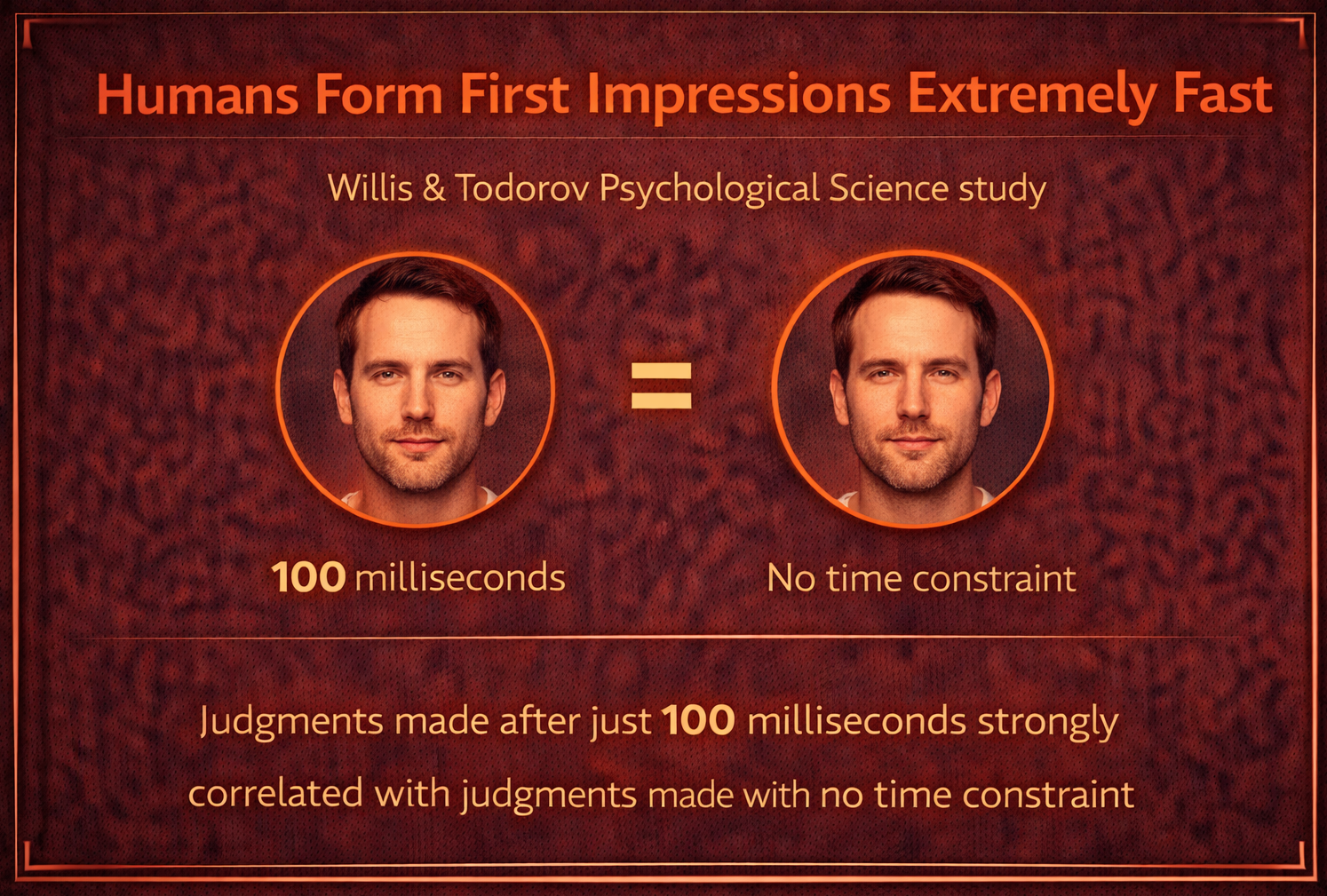
Humans form trait impressions from faces extremely fast. In a classic paper in Psychological Science, Willis & Todorov found that judgments made after just 100 milliseconds of seeing a face strongly correlated with judgments made with no time constraint.

Same principle: viewers don’t carefully analyze first. They feel first. So if the aesthetic feels inconsistent, cheap, or unclear, trust drops, even if the content is good.
3) Looks win attention, but personality wins attachment
The look is the hook. Personality is the retention engine.
That’s why “niche = visuals only” is incomplete. Two creators can share the same aesthetic lane (e.g., goth, blonde bombshell, redhead, etc.), but the one with a clear personality contract converts harder because the audience knows what they’re subscribing to: soft and safe, cold and untouchable, playful and chaotic, confident and dominant, etc.
This is also where the two valid strategies you mentioned become important:
Look matches personality: easiest trust, fastest clarity, lowest confusion.
Look doesn’t match personality: higher intrigue, but only works if the contrast is consistent (otherwise it feels random).
4) Why consistency matters more than novelty
Consistency isn’t just “posting often.” It’s making the brand recognizable.
There’s a well-documented cognitive effect called the picture-superiority effect: people tend to remember pictures better than words.
So if your visuals and personality are consistent, you become easier to remember, which makes returning viewers more likely, which makes conversion more likely. That’s why the goal is not to be endlessly new. The goal is to be instantly identifiable.
Key takeaway: Aesthetics create fast trust signals; personality creates loyalty; consistency creates memory.
The 6 Core Lanes
Choosing a lane is the strategy part.
But most creators don’t lose because they chose the “wrong” lane, they lose because they can’t execute the lane consistently.
Each one is a different psychological trigger in the market: some win through mass demand, some through rarity, some through identity and loyalty. That’s why two creators can pick the “same” lane and get completely different results, because the lane is only the surface.
The real win is how the lane is executed:
the personality contract (what it feels like to follow this character),
the format consistency (how recognizable the content becomes),
and the brand world (what makes this feel like a universe, not random posts).
That’s what the Packs are built for: not “a look,” but a lane you can actually run like a studio, coherent, repeatable, and memorable.
Goth Baddie
What this lane is: A high-identity aesthetic where the brand world matters more than “pretty visuals.” Think strong tone, strong vibe, strong consistency.
Why it converts: Identity lanes often convert through loyalty. People don’t just follow; they attach to the character and return for the same emotional experience.
Where people mess it up: Treating it like “dark photos” instead of a consistent character. The look alone gets attention, but without a stable personality contract, it reads as random and doesn’t build retention.
Personality fit options:
Match (edgy, confident, cold, untouchable) → easiest trust
Contrast (goth look, unexpectedly sweet/soft energy) → higher intrigue, but only if consistent
Demand signal note: Identity-driven categories show strong visibility in annual trend coverage (audiences exploring more specific identity aesthetics, not only “vanilla archetypes”).
What this pack helps you execute:
Goth/alt lanes win on world-building. This pack is designed to keep the vibe coherent: tone, attitude, and recurring formats that make the account feel like a “world,” not random dark posts. It’s especially useful for creators who want loyalty and retention, because the pack keeps the character consistent while still giving enough variation to avoid repetition.
Latina Heat
What this lane is: A massive demand bucket with heavy competition. The visual lane is instantly understood by audiences—which is both a strength and a trap.
Why it converts: Demand is proven at the search-behavior level. In Pornhub’s 2025 Year in Review reporting (as covered in mainstream press), “Latina” ranked #1 in the U.S.
That doesn’t mean “easy money.” It means the lane has a large audience, so positioning and packaging decide who wins.
Where people mess it up: Staying generic inside a huge bucket. If it’s only “the label,” it’s forgettable. The advantage comes from recognition + consistency + personality clarity.
Personality fit options:
Match (warm, confident, playful, high-energy)
Contrast (soft/cozy personality in a “hot” lane) → can differentiate strongly if stable
What this pack helps you execute:
This lane is massive, which means generic loses. The pack exists to prevent “bucket blending”, it gives a tighter character direction and packaging cues so the lane becomes recognizable and premium instead of interchangeable. It’s built to help a creator stand out inside a crowded lane by emphasizing identity + format consistency, not just aesthetics.
Redhead Seduction
What this lane is: A rarity lane. The conversion advantage is “distinctiveness at scroll speed.”
Why it converts: Red hair is naturally rare, Reuters notes redheads are only ~1% to 2% of the world’s population.
Rarity creates instant recognizability, which is a cheat code for recall and brand identity, especially in faceless content where recognition replaces the “real person” factor.
Where people mess it up: Not leaning into the distinct “character.” If the personality is bland, the look becomes a gimmick instead of a brand.
Personality fit options:
Match (bold, teasing, confident, seductive)
Contrast (innocent/calm personality with a high-signal look) → high intrigue if consistent
What this pack helps you execute:
This pack leans into the main advantage of the lane: instant recognizability at scroll speed. It’s built to turn “distinct look” into “distinct brand” through consistent character energy and repeatable content angles. The goal is that the account feels like a signature, not a gimmick.
Blonde Bombshell
What this lane is: An archetype lane. It’s less about raw “preference rankings” and more about cultural readability.
Why it converts: This archetype is instantly legible: people understand the vibe fast. The win condition is premium packaging, because the lane is common, and common lanes require a stronger personality contract to feel “worth following.”
Where people mess it up: Assuming the archetype alone guarantees conversions. It doesn’t. Without consistent tone + format, it blends into a thousand similar accounts.
Personality fit options:
Match (luxury confidence, “premium” energy, controlled intensity)
Contrast (bombshell look with nerdy/cozy/awkward charm) → sticky when consistent
What this pack helps you execute:
Bombshell lanes win when the brand feels premium and controlled, not chaotic. This pack is designed to give the lane structure: consistent personality framing, repeatable formats, and packaging cues that signal value. It’s for creators who want the archetype to feel like a brand, not a stereotype.
Melanin Magic
What this lane is: A strong demand bucket with deep competition, similar to Latina/Asian lanes, but with different cultural signals and audience expectations.
Why it converts: A peer-reviewed paper that references Pornhub’s search reporting notes that in the 2022 top searched terms, “ebony” ranked #3, with related terms like “bbc” (#9) and “black” (#13) also appearing.
This supports the idea that demand is not “niche-small”, it’s a major, recurring preference bucket.
Where people mess it up: Leaning on generic tropes instead of building a premium, consistent identity. In big demand lanes, the differentiator is always packaging + personality + consistency.
Personality fit options:
Match (confident, high-status, bold, magnetic)
Contrast (soft, warm, “safe obsession”) → can differentiate hard if coherent
What this pack helps you execute:
This pack is built to keep the lane high-value and consistent: strong identity direction, clear tone, and repeatable angles that build loyalty instead of one-off spikes. The point is not to rely on generic tropes, but to run a premium lane where the audience recognizes the character and returns for the experience.
Asian Dream
What this lane is: Another massive demand bucket that often performs best when it’s sub-positioned (because “Asian” alone is too broad).
Why it converts: Pornhub’s 2025 Year in Review reporting (as covered in mainstream press) lists “Asian” as a top U.S. search term (top 3).
Again: demand is real, but “broad” lanes require more intentional personality and format to avoid looking generic.
Where people mess it up: Being visually consistent but identity-inconsistent (switching personality weekly). Broad lanes need a tighter character contract to feel unique.
Personality fit options:
Match (sweet/soft, elegant, calm, “dreamy”)
Contrast (cute aesthetic with assertive confidence) → strong intrigue if consistent
What this pack helps you execute:
This lane is broad, so the risk is looking generic. The pack helps by narrowing the identity: it gives a specific personality contract and repeatable formats so the lane becomes “this account’s version” of the bucket. That’s what creates memorability and conversion in a lane that otherwise blends together fast.
The decision rule: Simple, but it works
Pick the lane where you can maintain one personality contract for 90 days.
Because the lane gets attention, but the personality + consistency is what builds loyalty. And loyalty is what makes monetization stable.
Differentiation Rules: How to stand out without changing your identity every week
Here’s the uncomfortable truth about AI girl niches:
Picking a lane doesn’t make you unique.
It just tells the market what bucket you’re entering.
And the bigger the bucket, the more ruthless the competition becomes, because a lot of creators will be using similar tools, similar generators, similar prompts, and similar aesthetics. So the real question isn’t “which niche should I pick?”
It’s:
How do you become recognizable inside a niche that already has demand?
Differentiation is not about being weird for attention. It’s about becoming identifiable, so your audience knows it’s you before they even read the username.
Rule #1 — Don’t differentiate with random changes. Differentiate with a “signature”
Most creators try to stand out by switching looks, switching styles, switching personality, switching everything.
That creates novelty, but it destroys identity.
A signature is the opposite: it’s one consistent element that stays stable across posts, your tone, your format, your “world,” your visual cue, your cadence, your type of hook. The audience doesn’t fall in love with your ability to change. They fall in love with what they can recognize.
This is why the packs aren’t meant to be “inspiration.” They’re meant to lock a signature fast.
Rule #2 — Story beats aesthetics, because story creates obsession
Aesthetic gets attention. Story creates attachment.
And story doesn’t have to be a Netflix script. In faceless brands, “story” is often simple:
a consistent character angle (what she wants, what she refuses, what she represents)
recurring themes (luxury, danger, sweetness, power, mystery)
a predictable emotional payoff (how the audience feels after watching)
This is how you turn a lane into a world. And worlds create loyalty.
Rule #3 — Build a brand world, not a feed
Feeds are random. Worlds are coherent.
A “world” is when everything feels like it belongs together:
the visuals match the tone
the tone matches the personality
the personality matches the lane
the lane matches the audience expectation
When this is coherent, the account feels real, even if it’s AI. When it’s not coherent, it feels like a folder of random images.
Rule #4 — Format is the most underrated differentiator
In crowded lanes, visuals alone don’t win because everyone has visuals.
Format wins because format is harder to copy quickly.
A recurring series structure, a predictable style of hooks, a consistent way of delivering value—this is what makes the audience say:
“Yeah, I recognize this account.”
Format is also how you scale without burnout, because it reduces decision fatigue. You stop inventing and start running a show.
Rule #5 — Choose a personality contract and protect it
This is the part most people skip.
A niche isn’t only what she looks like. It’s what it feels like to follow her.
If the personality is stable, the audience builds trust.
If the personality changes weekly, the audience feels uncertainty.
And uncertainty kills conversion.
There are only two valid strategies:
look matches personality (fast trust, easy clarity)
look contrasts personality (high intrigue, but only if consistent)
Both work. Random doesn’t.
The simplest differentiation checklist
If an account isn’t growing, it’s usually missing one of these:
a signature visual cue
a stable personality contract
a recurring format (series)
a clear emotional payoff
a recognizable “world”
That’s the difference between “a niche account” and “a brand.”
The Sustainability Filter: Pick a lane you can actually maintain
The best niche isn’t the one that looks the hottest on day one.
It’s the one you can run for 90 days without breaking your identity.
Because in this space, the real killer isn’t “bad ideas.” It’s the slow collapse that happens when the lane demands too much: too many variations, too much editing, too much reinvention, too much pressure to stay new. That’s when creators start switching aesthetics weekly, changing personalities midstream, and calling it “strategy” when it’s really just fatigue.

Translation: if a lane requires nonstop intensity to maintain, it’s not a lane, it’s a countdown.
The Sustainability Filter: 3 questions that decide if a niche is viable)
1) Can this lane stay recognizable with low effort days?
Some aesthetics require perfect lighting, perfect styling, perfect everything. That’s fine… until real life happens. A sustainable lane still looks “on brand” even when output is light, because the identity is carried by repeatable cues, not endless production.
2) Can the personality contract stay stable for 90 days?
The fastest way to kill conversion is to keep the same look but change the vibe every week. People don’t subscribe to an image; they subscribe to a consistent experience. If the personality has to constantly shift to keep the lane interesting, the lane will eventually feel fake or exhausting to run.
3) Does the lane fit your workflow capacity?
High-maintenance lanes can win, but only if the workflow is built like a studio. If the lane demands “fresh perfection” constantly, it will punish you unless you’ve already built batching, an asset library, and quality gates.
Why AI helps, but only if the system is designed
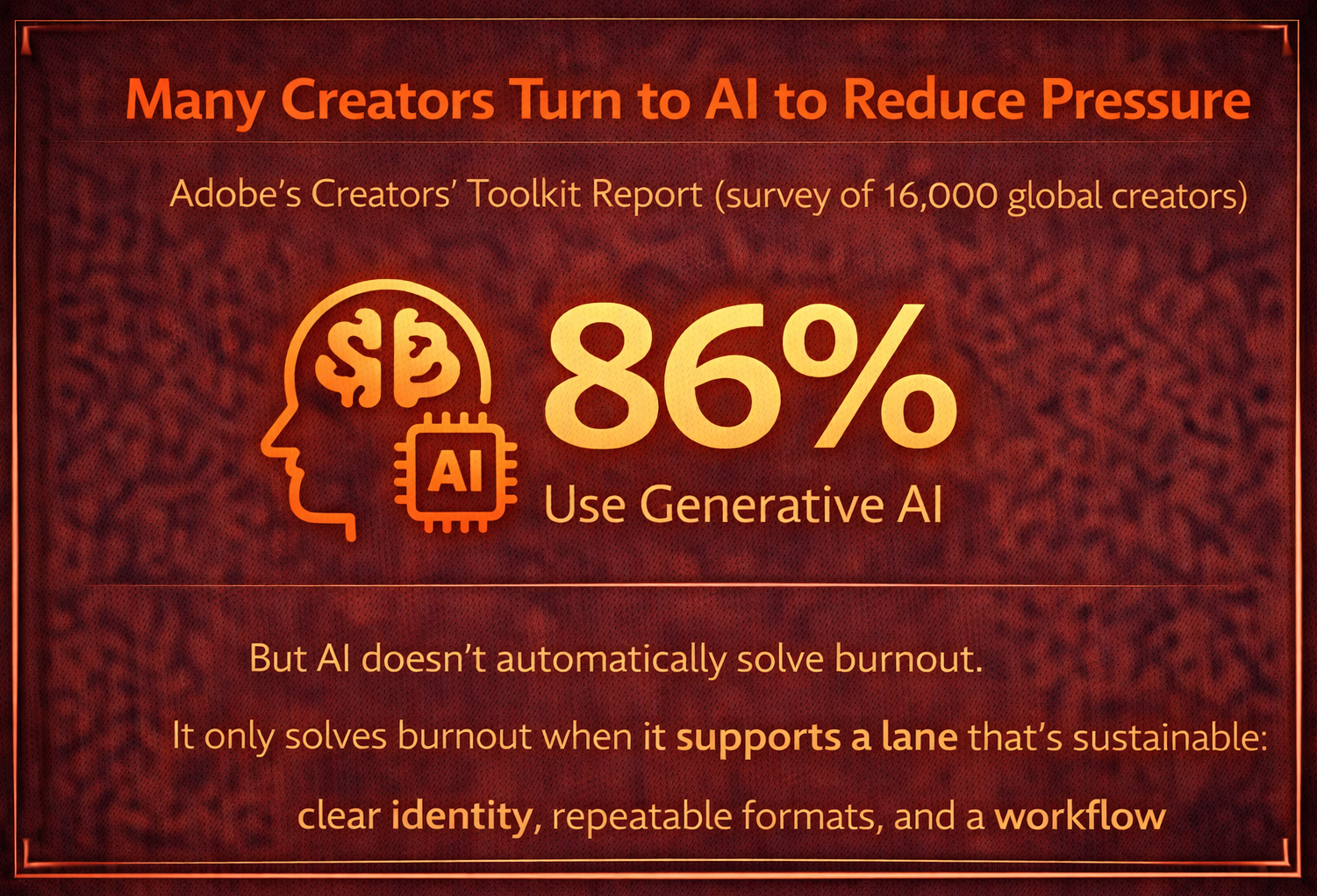
A lot of creators turn to AI to reduce the pressure. Adobe’s Creators’ Toolkit Report (survey of 16,000 global creators) found that 86% use creative generative AI in their workflow. But AI doesn’t automatically solve burnout. It only solves burnout when it supports a lane that’s sustainable: clear identity, repeatable formats, and a workflow that doesn’t require “reinvention” every day.
Bottom line: pick the lane you can repeat when you’re tired, not the lane you can only execute when you’re obsessed.
Validation Without Wasting 90 Days
How to test a lane fast: Without rebranding every week
A lane doesn’t need “more time.” It needs proof.
Most creators waste months because they test the wrong way: they change the look, change the vibe, change the format, change the posting schedule… then blame the algorithm when nothing is clear. That’s not validation. That’s noise.
Validation is simple: run small, controlled tests so you can answer one question at a time:
Is this lane getting attention?
Is it creating intent (profile clicks / link intent / DMs)?
Is it sustainable to run without forcing constant reinvention?
The rule: test one variable at a time
If everything changes, nothing is learnable. The point of validation is not to “win instantly”, it’s to discover what actually moves the needle.
This is the same logic behind A/B testing: compare two versions while controlling variables. Meta explicitly frames A/B testing as comparing two versions of an ad strategy by changing variables (creative, audience, placement, etc.) so you can isolate what caused the difference.
The “14-day lane test”

A clean lane test is short enough to stay disciplined, but long enough to collect real signals. On Meta’s A/B test tools, tests are designed to run on a schedule between 1 and 30 days, which is a good reminder that tests should be time-boxed and structured, not endless “maybe it’ll work later.”
In practice, the goal of a short lane test is:
keep the look consistent,
keep the personality contract consistent,
keep the format consistent,
and only vary one thing (angle, hook type, posting time, CTA style, etc.).
That way, if results change, you know why.
What signals matter and what to ignore
During validation, views are not enough. A lane can get attention and still fail to convert.
Better signals (because they indicate intent):
Profile clicks (curiosity → identity interest)
Saves / shares (value → memorability)
Repeat viewers (recognition → loyalty forming)
Link intent / DM intent (attention → action)
If those signals are flat, the lane may be wrong or the personality/packaging is unclear. That’s the whole point of testing: you find out before you waste months.
Avoid the #1 validation trap: False positives
A viral spike can be a false positive. It can happen because of timing, novelty, or one standout post—but not because the lane is stable.
A lane is validated when:
it works more than once, and
it still works when you repeat the identity and format.
If it only works when you constantly switch looks or personalities, it’s not a lane, it’s a roulette wheel.
The outcome of validation should be a decision
At the end of a short test, the goal is to make one of three decisions:
Commit (the lane shows intent + feels sustainable)
Refine (lane is right, but personality/format packaging is unclear)
Drop (no intent signals, high effort, or you can’t sustain it)
That’s how you avoid wasting 90 days.
The Lane That Wins: How to Choose a Niche That Actually Converts
By now, the pattern should be obvious: most people don’t lose in the AI girl space because their visuals aren’t good enough.
They lose because their lane isn’t coherent.
They pick a look, but they don’t build a character. They chase demand, but they don’t build recognition. They post for attention, but they don’t protect identity long enough for the audience to attach. And when identity isn’t stable, everything downstream becomes harder: followers don’t become loyal, loyalty doesn’t become paid outcomes, and paid outcomes don’t become consistent revenue.
That’s why “niche” is never just visual. A lane is a market position + a personality contract. The look is the first-impression signal, but the personality is the experience people come back for. This is also where the two winning strategies live: either the look matches the personality (fast trust, easy clarity), or the look contrasts the personality (higher intrigue, but only if the contrast stays consistent). The only strategy that doesn’t work is random, changing the vibe every week and calling it growth.
If this pillar did its job, it should’ve helped a reader stop asking “what niche is best?” and start asking a better question: what lane can I repeat for 90 days without breaking identity and that a real audience already shows demand for? That’s the lane that compounds. Not because it’s trendy, but because it becomes recognizable. And in a feed world, recognition is leverage.
Now, here’s how to move forward without getting stuck in theory:
If the missing piece is clarity, definitions, vocabulary, and what “AI modeling” actually means in practice, go through AI Modeling 101 first, because it’s the foundation that makes every other pillar easier to execute.
If the lane feels right but execution feels heavy, the problem isn’t your niche, it’s your production system. That’s exactly what The Faceless Creator Workflow pillar is for: building a studio-like pipeline so output stays high quality without burnout.
And if you’re getting attention but it isn’t turning into paid outcomes, you don’t need a new niche, you need a monetization machine. That’s what Monetization Systems for Adult Creators breaks down: offer ladders, conversion paths, retention loops, and how to stop revenue from resetting every month.
AI Content Safety & Compliance isn’t about fear, it’s about protecting momentum. In this space, the biggest losses don’t come from “bad content,” they come from getting traction and then stepping on a landmine: account flags, sudden reach drops, payment friction, rights confusion, or content mistakes that force you to rebuild from zero. That’s why safety and compliance is not a boring legal appendix, it’s a growth system. When you understand what platforms actually treat as “safe to recommend,” how to keep a brand adult-adjacent without triggering restrictions, and how to structure assets and permissions so you’re not exposed later, you stop operating in panic mode. Pillar 6 exists to make your business durable, so when things start working, they keep working.
Finally, if the reader already knows which lane fits (Goth Baddie, Latina Heat, Redhead Seduction, Blonde Bombshell, Melanin Magic, Asian Dream) and just wants to execute without guessing, the fastest path is the AI Girl Niche Packs, because they’re designed to lock identity + personality + packaging into a repeatable system, not just “give ideas.” And if someone wants the full step-by-step roadmap that connects lane choice → workflow → monetization into one complete plan, that’s exactly what the eBook is for.
Pick the lane. Protect the personality contract. Build recognition. Then let consistency do what it always does: compound.
FAQ — AI Girl Niches & Growth
1) Is niche just the “look” (hair color / aesthetic / ethnicity)?
No. The look is the scroll-stopper, but the niche is the full experience: look + personality + format + expectations. Two accounts can share the same look and get totally different results because one has a clear personality contract and the other feels random. People follow visuals, but they stay for identity. If the vibe changes every week, the niche never becomes a brand.
2) What’s the difference between “look matches personality” and “look doesn’t match personality”?
If the look matches the personality, trust builds faster because everything feels coherent and instantly believable. If the look contrasts the personality, it can create stronger intrigue because the character surprises people, but only if the contrast is consistent. The mistake is mixing both by accident: one week sweet, next week cold, next week chaotic, while the visuals stay the same. Consistency is what turns contrast into intrigue instead of confusion.
3) Which niche is the most profitable?
There isn’t one universal “best.” Profit depends on conversion path, retention, and execution, not just the bucket. Some lanes are huge demand buckets (high competition), while others win through rarity or identity loyalty. The profitable niche is the one you can execute coherently for 90 days with stable personality and packaging. If you can’t sustain the lane, you can’t monetize it reliably.
4) How do I know if a lane has real demand: Without trusting fake “top niches” lists ?
Use revealed preference signals (what people search for, not what they claim they like), reputable annual reporting/trend reports, and consistent category momentum over time. Random blog lists usually recycle each other without linking to an actual dataset. Demand signals don’t replace creativity, they tell you whether you’re building inside a lane that already has buyers. Then differentiation decides whether you win inside that lane.
5) Why do some lanes get followers but don’t convert into paid outcomes?
Because follow triggers and pay triggers are different. Aesthetic novelty can earn followers, but paying usually requires trust, clarity, and a stable identity that people want more of. If your account feels like a folder of random images, the audience enjoys it but doesn’t commit. Conversion requires a clear promise and consistent “experience.” That’s why niche selection and monetization system have to match.
6) How do I differentiate in a niche that’s already crowded?
Don’t differentiate by changing everything. Differentiate by creating a signature: stable personality contract, recognizable packaging cues, and a recurring format that makes the account feel like a “show.” Crowded buckets punish generic brands, but they reward accounts that become identifiable at scroll speed. A lane becomes powerful when people recognize it before they read the username. That’s how you stand out without rebranding weekly.
7) What’s the fastest way to validate a lane without wasting months?
Run a short, controlled test where the look, personality, and format stay consistent and only one variable changes (angle, hook, CTA, posting time). If everything changes, nothing is learnable. Validation isn’t “did I go viral once?” It’s “can this lane produce intent more than once?” Look for signals like profile clicks, saves/shares, repeat viewers, and link/DM intent, not just views.
8) How do I avoid burnout while still growing?
Pick a lane you can execute on low-energy days, not only when you’re obsessed. Sustainable growth comes from repeatable formats, a consistent asset library, and a cadence that fits real life. If the lane demands constant reinvention to stay interesting, it will eventually collapse. The goal is a lane that stays coherent even when output is light. Systems beat intensity every time.
9) Do I need to use multiple niches to grow faster?
Usually no. Multiple niches often create identity blur, and identity blur kills trust. It’s better to build one lane until it becomes recognizable, then expand carefully with controlled “sub-lanes” that still feel coherent. The goal is not variety, it’s memorability. You can add depth without switching identity.
10) Where do the AI Girl Packs fit into this?
The blog helps you choose a lane and understand why it converts. The packs exist for execution: they help lock the lane’s identity, personality direction, and packaging consistency so you can run it like a studio instead of guessing every day. If you already know which lane fits you, packs are the shortcut to start producing coherently fast.
