AI Content Safety & Compliance: Rights, Ethics, and Account Protection Basics
Intro: Safety Isn’t Censorship, It’s Business Continuity
Most creators treat compliance like a vibe-killer.
Until the day it kills their momentum.
Because the truth is: you can do everything “right” creatively, you can finally start getting traction, and then one single issue, a takedown, a payout hold, a report wave, a policy shift, a rights claim, turns your whole pipeline into a stop sign. And in adult-adjacent AI, that risk isn’t rare. It’s baked into the territory.
This pillar exists for one reason: business continuity.
Not “how to be perfect.” Not “how to never get flagged.” Those are fantasies. The real goal is building a system that keeps working when the internet does what the internet always does: tightens rules, changes enforcement, and punishes anything that looks ambiguous.
In the US, your risk isn’t just “platform rules.” You’re operating under three rulebooks at the same time:
what platforms allow and recommend,
what payment systems tolerate,
and what US law actually cares about (FTC disclosures, copyright takedowns, minors, privacy, messaging rules, impersonation/likeness, etc.).
And here’s the part most people miss: you don’t get punished only for what you meant. You get punished for what your content looks like at scale. Ambiguity is expensive. Confusion is expensive. “Close enough” becomes expensive once money is involved.
So this pillar won’t give you recipes that get you in trouble. It will give you the map:
what the real risk categories are,
how creators get clipped without realizing it,
and how to build “safety” into your brand and workflow without killing growth.
Because safety isn’t a wall.
It’s a runway.
The 3-Layer Rulebook: What actually controls your business
Most creators think the rules are simple: “follow platform guidelines and you’re good.”
That’s the first trap.
In reality, your business is controlled by three different rulebooks at the same time and they don’t always agree with each other. You can be “allowed” on a platform but not “recommended.” You can be “fine” in content terms but still get hit on payments. And you can be doing everything the way other creators do it and still trigger legal problems the moment you scale.
Here are the three layers you’re really playing under:
Layer 1 — Platform policy: What’s allowed vs what’s recommendable
Platforms don’t just decide what can exist, they decide what they’re willing to push. Adult-adjacent brands often get stuck in the “visible to followers, invisible to discovery” zone. That’s why creators feel shadowbanned even when nothing is officially removed. Your risk here isn’t only bans, it’s distribution throttles that quietly starve your funnel.
Layer 2 — Payment policy: What processors tolerate
Even if a platform lets you post, payment systems have their own tolerance level. Chargebacks, disputes, unclear offers, confusing billing descriptors, and “high-risk” signals can lead to payout delays or restrictions. This layer is brutal because it doesn’t care about your creativity, it cares about risk, reversals, and compliance. A creator can look successful publicly and still get their cashflow choked privately.
Layer 3 — US law: What can create real consequences
This is the layer that most creators ignore until it hurts. In the US, the big buckets are predictable:
FTC rules when you promote anything (affiliate links, sponsorships, testimonials, “results” claims).
Copyright/DMCA risk if you use protected music, characters, logos, or recognizable third-party content.
Minors/age issues (zero-tolerance zone, this is not a “learn later” category).
Privacy if you collect emails, track users, run a store, or manage customer data.
Messaging rules if you do email/SMS automation at scale.
Likeness/impersonation risk if your AI identity resembles real people too closely.
You don’t need to memorize statutes to understand the point: once you start selling, you’re not just a creator, you’re operating like a business. And businesses are expected to have basic guardrails.
The big takeaway
Most people lose accounts and momentum not because they did something obviously reckless… but because their system is built on ambiguity.
They’re relying on:
unclear positioning,
unclear offers,
unclear ownership,
unclear boundaries.
And ambiguity always gets punished eventually, by platforms, by payments, or by law.
Privacy & Data: Adult content creators still have a data risk, even on 3rd-party platforms
Most creators think compliance only matters when you’re “a real brand.”
But the second you post an affiliate link, do a sponsorship, promote a tool, sell a pack, or even casually say “this helped me get results,” you’re doing advertising and in the US, advertising is governed by rules, not vibes.
This is where creators get clipped quietly. Not because they’re evil. Because they treat marketing like casual conversation, while regulators treat it like consumer protection.
The FTC’s core idea: don’t hide the relationship, don’t mislead the buyer
The FTC’s Endorsement Guides and related guidance are built around one simple principle: if there’s a material connection (money, free products, affiliate commissions, paid partnership, perks), people need to know, clearly.
That means disclosures can’t be buried, vague, or “technically there.” They have to be noticeable and understandable to normal people.
And the reason this matters isn’t just legal. It’s trust. Adult-adjacent audiences are sensitive to anything that feels like a trick, and once trust breaks, chargebacks and reports increase.
“Clear and conspicuous” isn’t a vibe either
The FTC literally uses the phrase “clear and conspicuous,” and their guidance explains it in practical terms: the disclosure should be hard to miss and easy to understand.
So “#sp” hidden in a hashtag pile, or a disclosure that only appears after someone clicks “more,” can become risky depending on context.
The most dangerous category: Claims, especially earnings/results claims
Here’s the creator trap: you’re trying to sell a transformation, so you talk about outcomes. But outcomes are where you can accidentally cross into deception if you imply:
guaranteed results
typical results that aren’t typical
“easy” outcomes without the conditions
FTC cases don’t only target giant corporations, they target misleading claims. The lesson for creators is simple: sell the method and the value, not guaranteed outcomes.
Reviews/testimonials are also tightening
The FTC finalized a rule to combat fake reviews/testimonials and allow civil penalties for knowing violations.
For creators, the takeaway isn’t “don’t use testimonials.” It’s: don’t manufacture hype, don’t stage fake proof, and don’t imply endorsements you don’t actually have. Adult-adjacent brands get watched harder when money is involved.
The creator-safe mindset
Think of FTC compliance like this:
If it’s paid, say it’s paid.
If you benefit, say you benefit.
If it’s a claim, make sure it’s honest, supportable, and not framed as guaranteed.
Because in the long run, compliance isn’t just avoiding problems, it’s protecting the one asset your whole funnel runs on: Credibility.
Copyright & DMCA: Why “everyone does it” still doesn’t protect you
If you want one “law layer” that actually shows up in your life as a creator, it’s this one.
Because copyright enforcement online doesn’t wait for a courtroom. It runs through DMCA notice-and-takedown, and that system is designed to move fast. That’s why creators get blindsided: they assume copyright is a “big company problem,” then a single claim deletes a post, triggers a strike, or blocks distribution right when momentum is building.
The DMCA isn’t a vibe, it’s a process

The important creator takeaway is simple:
you don’t need to be “stealing” intentionally to get hit
you just need to use something you don’t have rights to (or look like you don’t)
And once you’re hit, the platform responds to the process, not your intent.
What triggers removals in creator businesses, especially adult-adjacent AI
Creators usually get clipped for assets, not for “ideas.” The high-risk categories are predictable:
copyrighted music/audio (especially in monetized contexts)
recognizable characters, logos, brands, and commercial IP
“borrowed” visual packs, overlays, or templates you don’t own
clipped content, reposts, or “edited” versions that still contain protected material
AI doesn’t magically make it safe. If your output contains copyrighted expression (or looks like it’s derived from protected material in an obvious way), the risk is still there.
“Fair use” is not a shield you can copy-paste
Practical translation: don’t build a business that relies on “maybe fair use.” Because once money is involved, “maybe” becomes expensive.
Counter-notices are real legal statements (not a casual button)
Some platforms let you file counter-notices, but that’s not “appeal vibes.” It’s a legal request to reinstate content, and platforms treat it seriously. YouTube describes a counter notification as a legal request to reinstate removed content if you believe it was removed by mistake.
The Copyright Office even provides sample counter-notice forms that include consent-to-jurisdiction language, which should tell you everything about how serious the system is.
So the goal isn’t to “fight every claim.” The goal is to build your brand so you don’t get hit constantly in the first place.
The real strategy: ownership beats cleverness
The safest creator path is boring:
build with assets you own
license what you don’t
avoid recognizable IP that triggers automated enforcement
keep your brand identity original enough that you’re not living in “lookalike” territory
Because in adult-adjacent niches, a takedown isn’t just lost content, it can cascade into reduced distribution, account risk, and payment friction.
Likeness, Impersonation & “AI Lookalike” Risk
This is the risk category AI creators underestimate the most, because it doesn’t feel like “copyright.” It feels like “style.” It feels like “a vibe.” It feels like “inspiration.”
But likeness is different. In the US, you can run into legal trouble not only for using someone’s exact face, but for using their identity in a way that looks like you’re exploiting it commercially.
And adult-adjacent content makes this even more sensitive, because the reputational harm is higher and people take it more seriously.
The core problem: Identity has legal value in the US

In many states, people have a “right of publicity” (the right to control commercial use of their name/likeness). California’s statute is a clean example: it creates liability for using someone’s “name, voice, signature, photograph, or likeness” for advertising or selling without consent.
New York also has a right-of-publicity framework (including post-mortem protections in §50-f).
Practical translation: if your AI persona looks like a real person (or is presented in a way that implies it is a real person), you’re walking into a category where “but it’s AI” doesn’t automatically protect you.
“Lookalike” is where people get sloppy
Most creators won’t straight-up use a celebrity’s face. The risk is subtler:
the face is “different enough,” but the identity cues are obvious
the name, styling, and context signal a specific real person
the marketing implies association, endorsement, or “this is basically her”
Even if you don’t intend impersonation, the commercial context (selling, subscriptions, ads) is what turns it into risk. This is why the safest path is almost always: original identity > recognizable resemblance.
Deepfake laws are expanding fast and adult content is a priority
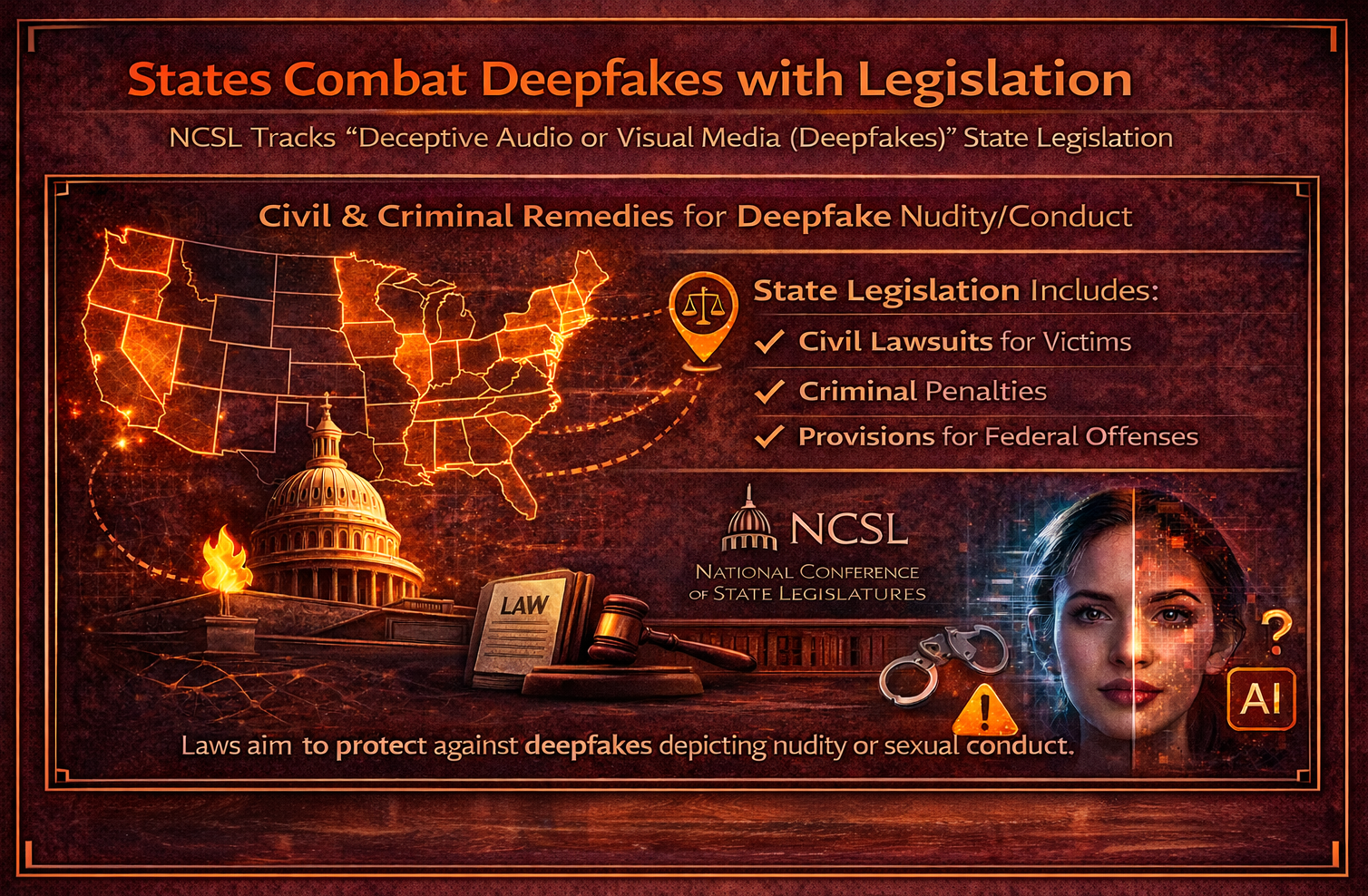
States are increasingly passing laws targeting deceptive synthetic media and non-consensual intimate imagery (NCII), including deepfakes. The National Conference of State Legislatures (NCSL) tracks “deceptive audio or visual media (deepfakes)” legislation, including laws that provide civil/criminal remedies for deepfakes depicting nudity or sexual conduct.
That trend matters even if you “think you’re fine,” because platforms and payment systems often tighten faster than the law does.
The brand-safe rule
If you want longevity, your “face strategy” should follow one principle:
Never build your business on someone else’s identity. Build it on your own.
That means:
avoid celebrity/real-person resemblance as a growth hack
avoid names/branding that imply a real person
avoid “this is basically X” positioning
treat identity as something you own, not something you borrow
Because once you scale, identity risks don’t stay theoretical. They become takedowns, disputes, reports, and sometimes legal threats.
Minors, Age-Gating & “Youth-Coded” Risk: Zero-tolerance territory
There are some mistakes you can recover from as a creator: a messy funnel, a weak offer, inconsistent posting.
This isn’t one of them.
When it comes to minors, age representation, and anything that could be interpreted as underage or youth-targeted, the tolerance is basically zero, legally, platform-wise, and reputationally. In adult-adjacent creator businesses, this is the category where “I didn’t mean it like that” doesn’t protect you, because intent isn’t the only thing that gets judged. Perception gets judged.
Two different risks get mixed together and both can hurt you
1) Content risk (age representation / implied youth)
This is the obvious one: anything that can be interpreted as depicting a minor or sexualizing youth cues can trigger immediate enforcement and permanent brand damage. For AI creators, this also includes “youth-coded” signals, styling, language, school-coded themes, or “barely legal” framing that increases risk even if you think it’s safe.
This is why serious operators avoid ambiguity. You don’t build brands that flirt with the edge.
2) Data risk (collecting data from kids)
Even if your content is adult-adjacent and not kid-directed, you can still create legal exposure if you run funnels or ads that accidentally collect data from kids.
Most adult creators won’t be “kid-directed,” but this matters because the internet is messy: traffic sources are broad, audiences are unpredictable, and platforms don’t always filter perfectly. Your funnel design needs basic guardrails so you’re not creating avoidable exposure.
Why age-gating is not optional in adult-adjacent businesses
Age-gating isn’t just “being responsible.” It’s risk control. It reduces the chance of:
the wrong audience being funneled into paid content
platform enforcement actions
payment disputes and reputational blowups
legal risk if someone claims harm or deception
And with AI, the risk multiplier is real: if the character looks ambiguous, people will interpret it the worst way possible, especially competitors or trolls.
The rule for serious creators: Eliminate ambiguity
In adult-adjacent spaces, ambiguity is expensive. If there’s even a tiny chance your branding could be interpreted as youth-coded, the best strategy is to remove those cues completely. Not because you’re “scared,” but because you’re building a brand that can scale without carrying a time bomb.
Because once the brand is working, you want to be focused on growth, not crisis control.
Messaging & Outreach Compliance (CAN-SPAM, TCPA): Why “automation” becomes liability
Once you start scaling, you’re going to want to re-activate people.
That’s normal. That’s business.
The problem is: the moment you move from “posting content” to “outreach systems” (email sequences, SMS blasts, automated DMs, follow-ups), you’re not just doing marketing anymore, you’re stepping into one of the most regulated, lawsuit-heavy areas in the US: messaging compliance.
And adult-adjacent creators get hit harder here for two reasons:
the audience is more likely to report or dispute,
creators often run “scrappy” systems that don’t keep clean consent records.
Email: CAN-SPAM is not optional
The important thing is the mindset: unsubscribe isn’t a threat to your growth, it’s part of running a real business. If your system can’t handle opt-outs cleanly, it’s not scalable.
SMS and automated outreach: TCPA is where people get wrecked

This matters for AI creators because the tools you’ll want (automated texts, AI voice, “set-it-and-forget-it” outreach) are exactly what regulators and class-action lawyers watch. You don’t want to build a growth engine that can turn into a legal bill.
The 2025 “one-to-one consent” shift: Why lead-gen loopholes are getting closed
The FCC has moved to tighten consent practices, including a “one-to-one” consent requirement aimed at preventing blanket consent from being sold across many marketers. Even if you never run lead-gen, the direction is obvious: messaging rules are moving toward more specific, more traceable consent.
The creator takeaway: Without turning this into legal homework
You don’t need to become a compliance nerd. You need to become an operator.
If it’s email: truthful sender info + truthful subject + clear opt-out.
If it’s SMS/automation: treat consent like a real asset, because without clean consent, automation becomes liability.
The point of Section 7 isn’t “message less.”
It’s “message smarter, with systems that don’t explode when you scale.”
Payments, Disputes & Chargeback Hygiene: How cashflow gets choked even when content is “fine”
A lot of creators think payment problems only happen when you’re “doing something sketchy.”
In reality, payment problems happen when your business looks high-risk from the outside. And in adult-adjacent creator economies, you don’t get judged on your intentions, you get judged on patterns: disputes, refunds, chargebacks, unclear billing, and confused customers.
This is why some creators feel “cursed” financially even when content and traffic are good: the cashflow layer is collapsing under friction.
The uncomfortable truth: chargebacks aren’t rare, and “friendly fraud” is real
Merchants consistently report that a large share of chargebacks come from first-party misuse (“friendly fraud”), not always from stolen cards. The Merchant Risk Council summary of the 2024 Chargeback Field Report notes that nearly half of respondents estimated friendly fraud was responsible for 50% or more of their chargebacks.
Translation for creators: not every dispute is your fault, but every dispute is still your problem.
So your goal isn’t to win every dispute. Your goal is to build a business where disputes don’t become a growth ceiling.
Why this matters: card networks have “excessive dispute” programs
If disputes spike, you don’t just lose money on a few transactions, you can get flagged into monitoring programs that trigger fees, restrictions, or pressure from your processor.

Mastercard’s Excessive Chargeback Program is one example: documentation commonly references thresholds like 100+ chargebacks per month combined with a chargeback-to-transaction ratio around 1.5%+ for program categorization (and higher tiers beyond that).
Visa also runs monitoring programs on fraud/disputes (ex: VAMP), and publishes program fact sheets about how entities are monitored and required to implement risk controls when thresholds are exceeded.
You don’t need to memorize thresholds. The point is: dispute rates are something payment ecosystems track aggressively, and high dispute patterns can choke your ability to scale.
Chargeback hygiene
In adult-adjacent funnels, chargebacks often come from the same few roots:
1) Confusion: What did I buy? what do I get? when do I get it?
This is why “clarity is compliance” in payments. Unclear offers create regret, regret creates disputes.
2) Billing descriptor shock: What is this charge?
If the customer doesn’t recognize the charge name on their statement, they dispute first and ask questions later.
3) Delivery ambiguity: Did I receive what I paid for?
Digital goods and access-based products are especially vulnerable to “not received” style disputes if your delivery expectations aren’t obvious.
What “good hygiene” looks like
You’re not trying to become a payment expert. You’re trying to remove the reasons people dispute in the first place.
A strong system usually has:
Clear offer language (what it is, what it includes, what it doesn’t)
Clear delivery expectations (access rules, timing, how to get support)
Recognizable billing descriptors (as recognizable as your setup allows)
A support trail (so disputes don’t become “he said / she said”)
Refund logic that reduces escalation (when appropriate)
Again: the payment layer doesn’t reward creativity. It rewards clarity and consistency.
The business takeaway
Creators think scaling is about content volume and virality.
But real scaling is about lowering risk signals while increasing throughput:
fewer confused buyers
fewer disputes
fewer chargebacks
more predictable cashflow
Because if your dispute rate rises while you grow, you don’t just lose money, you lose stability.
The Safety Operating System: Protect the brand without killing growth
Most creators treat safety like a list of random rules.
That’s why it feels heavy, confusing, and easy to ignore.
A real creator brand doesn’t run on rules, it runs on an operating system. Something you can apply the same way every week, across every platform, no matter what you’re selling. The goal isn’t perfection. The goal is continuity: keep accounts stable, keep cashflow stable, keep momentum alive.
Here’s the Safety OS for US-first, adult-adjacent AI influencer businesses:
1) Policy-safe discovery: Stay “recommendable”
This is your public layer: what strangers see, what platforms judge, what gets pushed or throttled.
The operating rule is simple: reduce ambiguity.
If your discovery content looks risky, platforms don’t need to ban you, they can just stop recommending you. So you build discovery content that stays brand-safe, clean, and consistent, while still creating curiosity and clicks.
This is where you protect distribution before you ever need to “recover” it.
2) Controlled monetization: Clarity beats cleverness
This is where you earn.
Your monetization layer survives by being:
clear about what someone gets
consistent in delivery expectations
clean in how it’s presented
Because payment systems don’t care about your aesthetic, they care about disputes, chargebacks, and risk signals. The OS mindset here is: every confused buyer is future friction. Clarity is not “nice.” It’s risk control.
3) Owned audience: Your recovery engine
Platforms rent you reach. Owned channels give you recovery.
An owned audience doesn’t mean you abandon platforms, it means you stop being fragile. When reach dips, you can re-activate:
buyers
subscribers
warm leads
people who already chose you once
This is the layer that lets you keep cashflow alive while you adjust strategy, instead of panicking because the feed got colder.
4) Documentation & process: The boring layer that saves you
This is what separates creators who scale from creators who constantly reset.
You don’t need corporate paperwork. You need simple operational discipline:
what you do when content is flagged
what you do when a takedown happens
how you handle disputes
how you store buyer info and proof of delivery
how you make affiliate/sponsor disclosures consistent
Process is what keeps problems from turning into chaos. It also keeps your brand consistent, which makes you easier to trust and easier to pay.
The “Safety OS” promise
When your Safety OS is installed, you don’t fear platform changes, you absorb them.
You don’t fear disputes, you reduce them.
You don’t fear growth, you can handle it.
Safety isn’t a wall.
It’s a runway.
The Durable Creator: How to Scale Without Stepping on Landmines
By now, the pattern should be obvious: most AI influencer creators don’t lose because their content isn’t good enough.
They lose because their business isn’t durable.
They build reach on one platform and call it stability. They stack offers, but don’t control risk. They scale automation without consent discipline. They use assets they don’t truly own. They push “edgy” identity signals that feel like growth… until a platform throttles them, a payout gets held, or a claim forces them to delete half their work. And once a system breaks at scale, rebuilding is slower, more stressful, and usually more expensive than building it right the first time.
That’s why safety and compliance isn’t a boring legal appendix. In adult-adjacent AI, it’s a growth system.
Because the real danger in this space isn’t “bad content.” It’s getting traction and then stepping on a landmine: account flags, sudden reach drops, payment friction, rights confusion, messaging mistakes, or identity choices that look harmless until they’re interpreted the worst way. When you understand what platforms treat as safe to recommend, how US rules shape ads and claims (FTC), how takedowns actually work (DMCA), why likeness and impersonation risk grows as you scale, and why your outreach systems need clean consent discipline, you stop operating in panic mode. Pillar 6 exists to make your business durable, so when things start working, they keep working.
Now, here’s how to move forward without getting stuck in theory:
If the missing piece is clarity, definitions, vocabulary, and what “AI modeling” actually means in practice, go through AI Modeling 101 first, because it’s the foundation that makes every other pillar easier to execute.
If safety feels overwhelming, remember: compliance is easier when your production is structured. That’s exactly what The Faceless Creator Workflow pillar is for, building a studio-like pipeline so output stays high quality and controlled, without burnout.
If you’re getting attention but it isn’t turning into paid outcomes, you don’t need a new account or a new vibe, you need a monetization machine. That’s what Monetization Systems for Adult Creators breaks down: offer ladders, conversion paths, retention loops, and how to stop revenue from resetting every month.
And if you’re unsure whether your current identity is scalable without risk, AI Girl Niches & Growth helps you choose a lane that converts without constantly changing the vibe (because changing identity every week doesn’t just hurt recognition, it increases risk signals too).
Finally, if the reader wants to execute without guessing, the fastest path is the AI Girl Packs, because they’re designed to lock identity, packaging, and structure into a repeatable system without pushing you into risky territory. And if someone wants the full roadmap that connects lane choice → workflow → monetization → durability into one complete plan, that’s exactly what the eBook: The Road To Sucess is AI N*des is for.
Build the brand. Protect the system. Reduce ambiguity. Then let consistency do what it always does: compound.
FAQ — AI Content Safety & Compliance
1) Do I actually need to care about laws if I’m “just a creator” on a third-party platform?
Yes, because platforms and payment systems often enforce risk rules as if you’re a business, even if you’re a solo creator. The moment you sell anything, you’re operating commercially: claims, disputes, takedowns, and identity confusion become real business liabilities. The law layer matters most when something goes wrong (a report wave, a takedown, a payout issue), because it sets the framework for what happens next. You don’t need to be a lawyer, you need to build guardrails so you don’t lose momentum right when things start working.
2) Do I have to disclose affiliate links and sponsorships?
If there’s a material connection (you get paid, receive free products, earn commissions, or benefit in any meaningful way), you should disclose it clearly. The FTC’s guidance is built around the idea that people deserve to know when an endorsement is incentivized. The risk isn’t only legal, it’s trust: hidden incentives are exactly what triggers backlash, reports, and disputes. Think of disclosure as part of brand credibility: the more money you make, the more important it becomes to be obviously honest.
3) Can I say “this method will make you money” when selling my eBook or packs?
Be careful with earnings/results claims. The safer framing is to sell the process and the tools, not guaranteed outcomes. If you imply results are typical when they aren’t, or you imply guarantees without proof, you increase legal and platform risk and you also increase chargebacks (because disappointed buyers dispute). The more you scale, the more your language gets treated like advertising, not casual conversation. Credibility compounds, but so do bad claims.
4) What’s the biggest copyright risk for AI creators?
It’s usually not “ideas,” it’s assets: copyrighted music, recognizable characters/logos, brand identifiers, and third-party content that’s easy to match. DMCA takedown systems are designed to move fast, and platforms respond to the process even if you “didn’t mean it.” Once your account has repeat issues, the risk becomes bigger than one post: it can affect distribution and account standing. The safest long-term strategy is ownership: original identity, licensed assets, and clean sourcing.
5) If I get a takedown, should I counter-notice?
Only if you genuinely believe the content was removed by mistake and you’re willing to treat it seriously. A counter-notice isn’t a casual “appeal”, it’s a legal statement and can involve consenting to jurisdiction (depending on the platform/process). Many creators click buttons without understanding the weight, and that’s how small problems become bigger ones. If you’re unsure, the best move is usually to adjust your asset strategy so you don’t keep getting hit repeatedly.
6) Is it okay if my AI girl “resembles” a celebrity as long as it’s not identical?
That’s one of the highest-risk shortcuts in the space. In the US, many states recognize likeness/right-of-publicity style protections, and the commercial context (selling, subscriptions, advertising) is what turns resemblance into risk. Even if you think it’s “different enough,” the combination of face cues + name cues + marketing vibe can look like exploitation or impersonation. The safest path is building an original identity that can’t be confused with a real person. (Example statute: California’s right of publicity framework.)
7) Do I need age-gating if my content is only adult-adjacent?
If your brand lives anywhere near adult-adjacent territory, age gating and clear boundaries are risk control, not optional “good behavior.” It reduces the chance of the wrong audience entering your funnel and reduces the chance of platform actions, disputes, and reputational problems. Also, in the US, COPPA is the anchor law around collecting data from children under 13 in kid-directed contexts, and it’s a reminder that kids + data + online systems is a regulated area. You don’t want accidental exposure.
8) I’m not running my own website, why should I care about privacy?
Because even platform-based creators end up handling sensitive business data: email lists, DMs, customer notes, receipts/screenshots, link tracking, and support messages. In adult-adjacent niches, privacy mistakes are more dangerous because harassment and doxxing attempts are more common. You don’t need a corporate compliance program, but you do need discipline: collect less, store less, and keep access tight. Privacy in this space is less about paperwork and more about preventing problems you can’t undo.
9) Can I automate DMs, email, or SMS to sell more?
Email is generally lower risk than SMS, but both become compliance issues when scaled. For email, CAN-SPAM expectations include truthful sender info, truthful subject lines, a clear opt-out mechanism, and honoring opt-outs. For SMS/automated outreach, TCPA and FCC rules put more emphasis on consent, and penalties can stack quickly when people complain. The risk isn’t automation, it’s automation without clean consent and clear user control.
10) Why do payouts get held or payment systems become “weird” even when nothing is wrong with my content?
Because payment ecosystems watch risk patterns: disputes, chargebacks, unclear offers, unclear delivery expectations, and high refund pressure. A few issues can be normal; a pattern can choke scaling. The fix is rarely “post different content.” It’s offer clarity, delivery clarity, and support discipline, making it hard for customers to misunderstand what they bought. Think of it as chargeback hygiene: fewer confused buyers means fewer disputes, which keeps cashflow stable.
11) Do I need to disclose that my influencer is AI?
Legally, it depends on the context, but operationally it’s smart to assume transparency expectations will grow over time. Disclosing AI can reduce deception risk, reduce report pressure, and protect trust, especially if your brand positioning could be interpreted as impersonation. You don’t always need a huge disclaimer, but you do need a consistent approach that fits your identity strategy. The goal is to avoid a future moment where someone frames your brand as “misleading” and you have no defense.
12) What’s the simplest compliance mindset for creators?
Reduce ambiguity. Most creator disasters come from gray zones: unclear claims, unclear offers, unclear identity, unclear asset ownership, unclear consent. If you build your system so everything important is obvious and defensible, you stop living in panic mode. Safety becomes part of growth, because durable brands don’t just scale faster, they scale longer.
